Reviewed by Yoan Guyon, Managing Director at gbc engineers
The AI boom has created an odd situation for data center construction. The same surge in demand that should accelerate modular adoption is also straining modular factory capacity, stretching lead times, and in some cases eliminating the speed advantage that made prefabricated construction attractive in the first place. In this article, gbc engineers examines what is actually happening in practice, and where we think the industry is heading by 2028 to 2030.
The shift that is already underway
For most of the past decade, the data center construction story was fairly predictable. Hyperscale operators built at scale using traditional methods and extracted cost efficiency through procurement volume and engineering standardization. Colocation providers and enterprise operators, needing speed and flexibility, moved toward modular and prefabricated approaches. The two camps were largely separated.
That clarity is fading. AI infrastructure demand is restructuring both markets simultaneously. According to the International Energy Agency, global data center electricity consumption is expected to more than double between 2022 and 2026, driven primarily by AI workloads. The question is no longer only which method is cheaper to build. It is which method can actually be delivered in time, at the density required, without concentrating too much risk in a single supplier or supply chain. On projects, we are increasingly finding that the decision is driven by factors that were less prominent five years ago: rack density, program urgency, and supply chain resilience.
What AI demand is actually doing to modular construction
Modular data center construction earned its reputation on one core promise: speed. Where a traditional site-built program might take 24 to 36 months, a modular approach could compress that to 12 to 18 months. For operators facing urgent capacity requirements, that compression was worth a premium on construction cost.
AI workloads are now testing that promise. The same global surge driving demand for modular data centers is overwhelming factory capacity: lead times for purpose-built power and cooling modules from some vendors reached 18 to 24 months in 2024, which means the speed advantage can be consumed before a single module leaves the factory.
The density problem modular is still solving
The more durable advantage of modular construction in the AI era is density management, not speed. AI compute racks from NVIDIA and other vendors are routinely specified at 40 to 100 kilowatts per rack and above, with next-generation configurations pushing higher.
Traditional raised-floor data center designs, built around 5 to 10 kilowatt assumptions, cannot accommodate these loads without significant structural and cooling retrofit.
Purpose-built modular systems designed for high-density liquid cooling can be configured for these loads from the outset, because the module is designed around the thermal and power requirements of the rack, rather than the reverse. Achieving that alignment through traditional construction requires a fully custom design process that can take as long as modular procurement itself.
|
Trend
|
Impact on modular
|
Impact on traditional
|
|
AI rack densities above 40 kW
|
Purpose-built modules align naturally with high-density loads
|
Requires full bespoke redesign of power and cooling architecture
|
|
Modular factory lead times lengthening
|
Speed advantage partially eroded in constrained supply periods
|
Less affected by single-supplier constraints
|
|
Gigawatt-scale campus demand
|
Module economics become less competitive at very large scale
|
Bespoke procurement regains advantage at hyperscale volume
|
|
Edge and regional AI deployment
|
Strong modular fit for standardized, distributed deployment
|
Difficult to justify bespoke design at small scale
|
|
Sustainability and embodied carbon reporting
|
Factory production reduces construction waste and site impact
|
Local sourcing and bespoke low-carbon specification possible
|
The bifurcation: two markets, two answers
What is emerging is a structural split in the market, where the right answer depends increasingly on project scale.
At hyperscale: traditional construction is holding its ground
At gigawatt-scale campus developments, traditional construction methods retain genuine advantages. The procurement volume at that scale allows major operators to negotiate directly with equipment manufacturers and achieve efficiencies no modular supplier can match on a per-module basis. The flexibility to optimize cooling strategy, power architecture, and heat reuse around specific site conditions is worth the added complexity when replicated across millions of square meters.
At enterprise, colocation, and edge: modular is consolidating its position
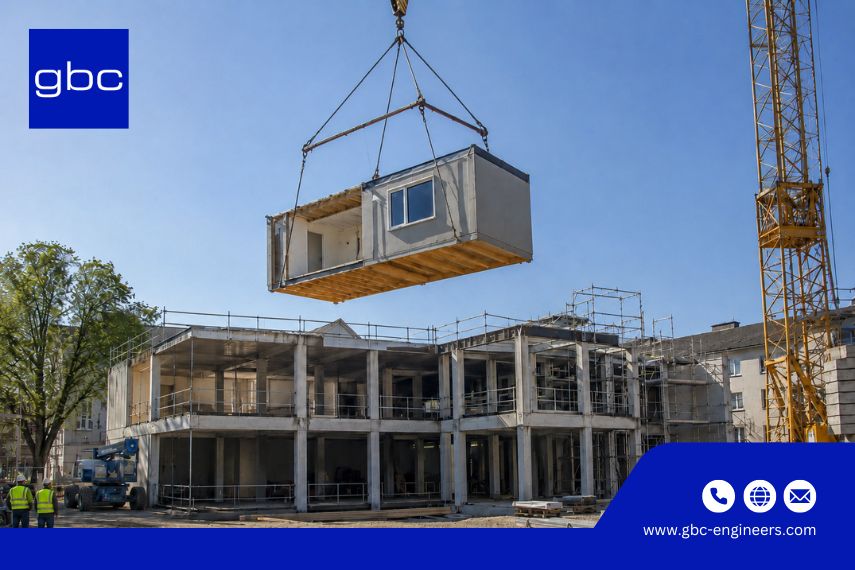
Below hyperscale, modular construction is consolidating its position. Enterprise operators building 5 to 50 megawatt facilities, colocation providers expanding regional capacity, and edge deployments running AI applications closer to end users are finding that modular fits their situation better than commissioning a fully custom design. The standardization of high-density power and cooling modules means operators can specify a facility outcome rather than a design, shifting project risk toward the module supplier. The trade-off is supplier concentration and some limitation on long-term flexibility, but for a five to ten year outlook those risks are manageable. On recent projects, we have found that operators are asking less often about cost per kilowatt and more often about which method gives them confidence the facility will be operational before their GPU allocation arrives.
Why total cost still matters, even when urgency dominates
Speed and density are dominating the current conversation, but the financial reality of data center ownership still runs over 15 to 20 years. A construction method that delivers faster but creates higher operating costs, maintenance constraints, or reduced flexibility over that period can easily cost more in total despite looking better on the opening day balance sheet.
The CapEx and phasing picture
Traditional construction requires committing capital to the full ultimate capacity at the outset: shell, structure, power rooms, and cooling plant are sized for the end state, paying today for infrastructure that may not support revenue for years. A modular approach allows operators to deploy the first phase and add capacity as demand grows, deferring significant capital expenditure until it is genuinely needed.
|
CapEx factor
|
Traditional construction
|
Modular construction
|
|
Civil and structural works
|
Higher for custom sequential delivery
|
Lower where standardization and parallel work are possible
|
|
Mechanical and electrical systems
|
Often sized for full ultimate capacity upfront
|
Can be phased and deployed with demand
|
|
Construction schedule
|
24 to 36 months typical
|
12 to 18 months typical, subject to factory availability
|
|
Financing cost during build
|
Higher due to longer draw period
|
Lower where activation happens earlier
|
|
Undeployed capital at opening
|
Often 30 to 50 percent of build cost
|
Often below 15 percent where phasing is planned carefully
|
Note: Figures are illustrative. Actual costs depend on site, specification, redundancy tier, and market conditions at time of procurement.
The OpEx reality over 15 years
Traditional data centers in temperate climates regularly achieve PUE values of 1.2 to 1.4, and a custom-designed facility can use local climate and building physics to push further than a standardized module typically allows. Modern modular systems have narrowed the gap, with leading vendors reporting PUE values of 1.2 to 1.35 for air-cooled configurations. But a PUE difference of 0.1 at a 5 megawatt IT load, with EU industrial electricity averaging around EUR 0.12 per kilowatt-hour, represents roughly EUR 5 to 8 million in cumulative energy cost over 15 years. That is not a rounding error in any TCO analysis.
|
OpEx factor
|
Traditional construction
|
Modular construction
|
|
Energy efficiency (PUE)
|
1.2 to 1.4 typical, site-optimisable
|
1.2 to 1.35 typical, less site-specific flexibility
|
|
Maintenance market
|
Open and competitive
|
May depend more on module supplier
|
|
Upgrade flexibility
|
High where the design is bespoke
|
Moderate where module boundaries limit change
|
|
Expansion predictability
|
Custom design required for each phase
|
Standardised increments, predictable cost and timeline
|
|
Decommissioning or relocation
|
Site-specific and complex
|
Module relocation possible in some configurations
|
Read more: Soil Improvement vs. Piling: The Data Center Foundation Question That Swings Your CapEx
Where the industry is heading by 2028 to 2030
Several signals point toward a reasonably clear direction.
Modular factory capacity will expand, but not immediately
The current factory capacity constraint is temporary. Major modular suppliers, including Vertiv, Schneider Electric, and several Asian manufacturers, are investing in expanded production. By 2026 to 2027, lead times should begin returning toward the 9 to 14 month range that made modular reliably faster than traditional approaches for mid-scale projects, though operators should not plan on that recovery as a given.
Liquid cooling will change the modular economics
The shift toward direct-to-chip and immersion cooling is restructuring the modular market. The capital cost of liquid-cooled modular systems is higher, but the heat rejection temperature is higher too, allowing the cooling system to use outside air for free cooling year-round rather than relying on mechanical chillers, which meaningfully improves energy efficiency over the life of the asset.
Modular suppliers who can deliver validated liquid-cooled systems with defined performance guarantees will be better positioned than those who cannot. Traditional construction teams can deliver liquid cooling too, but the responsibility for testing and proving the system works falls on the project team rather than the supplier.
Read more: Air vs Liquid Cooling in Data Centers: When Should You Make the Switch?
Sustainability regulation will influence method selection
Commission Delegated Regulation (EU) 2024/1364 is making operational energy and water reporting a compliance requirement for data centers in Europe, and embodied carbon is moving toward mandatory disclosure in several jurisdictions. Factory fabrication typically generates less construction waste than site-built methods, and some modular manufacturers have published embodied carbon data for their products. As sustainability reporting becomes more consequential for financing and permitting, the ability to make a clear, documented claim about construction carbon will influence method selection in ways cost comparisons alone do not capture.
The 2030 data center construction landscape
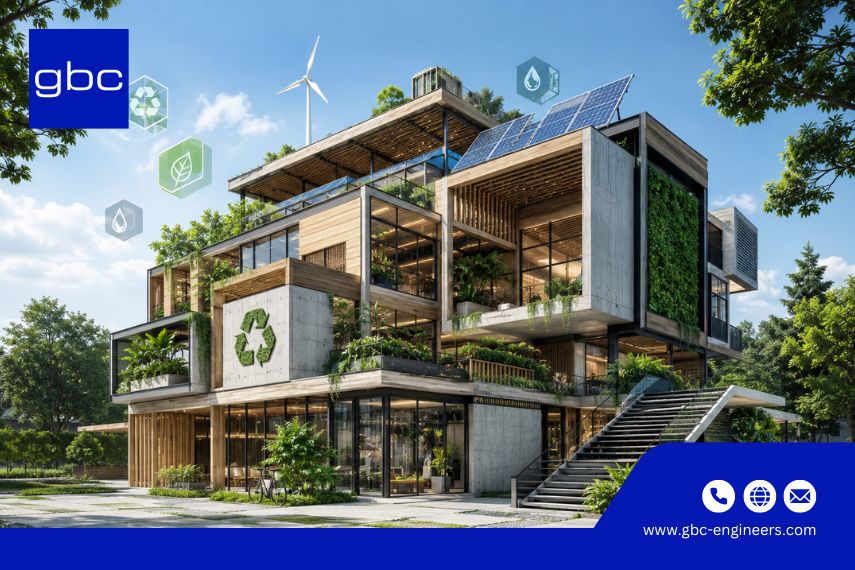
- Modular construction will dominate edge, regional colocation, and enterprise deployments below approximately 30 megawatts.
- Traditional construction will remain competitive at hyperscale campuses above 100 megawatts where procurement volume and bespoke engineering create genuine cost advantages.
- The middle tier, 30 to 100 megawatts, will increasingly use hybrid approaches: traditional civil and structural frame with prefabricated power and cooling modules integrated into a permanent building shell.
- Liquid-cooled modular systems will become the default specification for AI and HPC workloads regardless of facility scale.
- Supply chain resilience will become a formal evaluation criterion alongside cost and schedule, driving some operators toward hybrid procurement strategies rather than full commitment to either approach.
Total cost of ownership: the framework that still applies
Trend analysis matters, but so do the numbers on each specific project. The table below summarizes the key TCO levers and how they typically push the decision. It is a starting framework, not a fixed rule, and should always be validated against the actual site, program, and operating model.
|
TCO factor
|
Typical direction
|
Favours modular
|
Favours traditional
|
|
Construction cost per kW
|
Neutral to slight modular premium
|
Phasing and parallel build
|
Scale and bespoke procurement
|
|
Time to revenue
|
Modular advantage when factories have capacity
|
Faster delivery in normal supply conditions
|
Not usually a strength
|
|
Deferred CapEx
|
Modular advantage
|
Capacity added with demand
|
Often more upfront infrastructure
|
|
Energy cost over 15 years
|
Depends on design and climate
|
Comparable with modern liquid-cooled modules
|
Site-optimized design possible
|
|
Maintenance flexibility
|
Traditional advantage
|
Supplier dependency may occur
|
Open competitive market
|
|
Expansion predictability
|
Modular advantage
|
Standardised increments
|
Custom design for each phase
|
|
Construction risk
|
Modular advantage in normal supply conditions
|
Factory QA/QC and parallel build
|
Sequential and more weather-exposed
|
|
Supply chain concentration risk
|
Traditional advantage
|
Single supplier dependency for module packages
|
Distributed across multiple trade contractors
|
Conclusion
The modular versus traditional construction debate is still evolving. The AI era is accelerating some trends, complicating others, and creating a market where the right answer depends more than ever on project scale, timing, density requirements, and supply chain conditions.
The standard cost comparison is no longer enough. The forces shaping how data centers are built through the rest of this decade go deeper than construction cost per kilowatt.
Frequently asked questions
Is modular data center construction still faster than traditional construction?
Usually yes, but less reliably than it was before 2023. AI-driven demand has stretched modular factory lead times to 18 to 24 months in some cases, eroding the schedule advantage for operators who do not plan procurement early.
In normal supply conditions, modular construction delivers operational capacity 30 to 50 percent faster than a comparable traditional program. Procurement timing now matters as much as the method selection itself.
Which construction method is better for AI workloads?
For urgent AI and high-performance computing deployments requiring high rack density, modular construction generally fits better because purpose-built modules can be configured for 40 to 100 kilowatt rack loads from the outset.
For very large AI campuses above 100 megawatts, traditional construction may offer better long-term economics through bespoke procurement and site-specific cooling design. The answer depends heavily on urgency, scale, and whether factory capacity is available.
What are the main risks of choosing modular data center construction?
The primary risks are supplier concentration, module boundary constraints that limit future flexibility, and dependency on factory production schedules. In constrained supply conditions, lead times can reach 18 to 24 months, which partially eliminates the schedule advantage.
Operators should also review maintenance, spare parts, and warranty arrangements carefully to avoid long-term dependency on a single vendor for operational continuity.
How will data center construction methods evolve by 2030?
The market is splitting in two. Modular construction will consolidate its position at edge, regional, and enterprise scale below approximately 30 megawatts. Traditional construction will remain competitive at hyperscale campuses where procurement volume creates genuine cost advantages.
A hybrid approach using traditional civil and structural work with prefabricated power and cooling modules is likely to become more common in the 30 to 100 megawatt range. Liquid-cooled modular systems will become the default specification for AI and HPC workloads at all scales.
How does sustainability regulation affect the modular versus traditional decision?
It is starting to affect project decisions in concrete ways. Factory fabrication typically reduces construction waste and site disturbance compared to traditional methods. Some modular manufacturers now publish embodied carbon data for their products, which supports reporting under emerging European sustainability frameworks including Commission Delegated Regulation (EU) 2024/1364.
As embodied carbon disclosure becomes more consequential for financing and permitting decisions, the ability to make a clear, documented sustainability claim for the construction method will influence project decisions in ways that pure cost comparisons currently do not capture.
|
About us
gbc engineers
is an international engineering consultancy with offices in Germany, Poland, and South East Asia, having delivered 500+ projects worldwide. We provide services in structural engineering, data center design, infrastructure and bridge engineering, BIM & Scan-to-BIM, and construction management. Combining German engineering quality with international expertise, we achieve sustainable, safe, and efficient solutions for our clients.
|