Ever noticed how the best products, from a sleek smartphone to your reliable car, all start with a focus on human needs? This human-centered design approach isn't just for consumer goods; it's the bedrock of effective enterprise data center architecture. As a Data Center Owner or DC Project Developer, your success hinges on understanding the intricate requirements of data processing, storage, and connectivity before a single shovel breaks ground.
You're likely immersed in the operational complexities of existing data centers or planning new digital foundations. Whether you're considering expanding physical capacity, enhancing service delivery, or adopting a strategic hybrid approach, the definitive answer lies in meticulous data center planning and design. It’s the essential roadmap to seamless facility management and resilient operations, ensuring your infrastructure can scale to meet growing demands.
What Exactly Goes into Data Center Design?
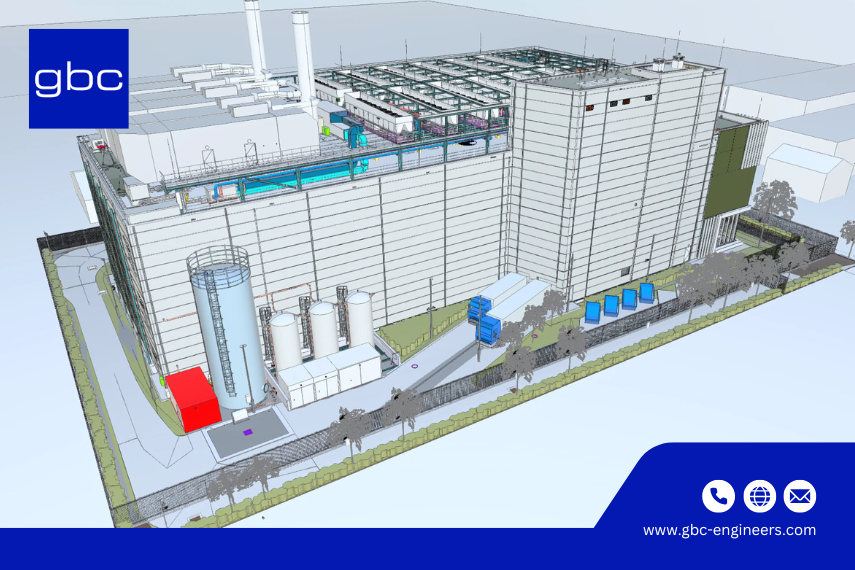
Fundamentally, data center design is the strategic blueprinting of a facility's entire physical infrastructure, its architectural layout, and the environment for its critical resources. It's about building a precise virtual model of your data center long before any physical implementation begins.
Purpose-built data center design decisions go far beyond just understanding tier levels, cost-to-build, or watts per square foot. A single misstep in these early stages can lead to escalating operational expenses, wasted capital, and ultimately, a failure to meet critical uptime and performance objectives. This article will guide you through the pivotal considerations for crafting a data center that genuinely empowers your business and stands the test of time.
Why a Well-Designed Data Center Matters So Much
A data center's purpose extends beyond merely housing IT equipment; it's about creating a dedicated, highly optimized physical environment for uninterrupted data operations. The right design guarantees the robust cooling, consistent power, unwavering reliability, and stringent physical security systems necessary to support intensive computing demands.
Modern data center design directly impacts how effectively a facility can host and deliver essential services. While large corporations pour significant investments into their facilities, smaller to mid-sized businesses often grapple with the substantial capital investments, ongoing operational costs, and maintenance required for their own data centers. This is why many wisely opt for colocation data centers, leasing secure, managed physical space.
Deconstructing the Data Center: Core Facility Elements
Regardless of its size – be it a section of a building, an entire premise, or multiple sites – a data center establishes a resilient ecosystem designed for continuous operations, even amid power disruptions. This critical infrastructure is composed primarily of the physical facility itself and its advanced supporting infrastructure.
This is the physical structure where an organization deploys its critical infrastructure, housing intricate power, cooling, and security systems. Key design considerations for the facility include:
- Physical Footprint: The vital square footage required, often segmented for distinct functions like server halls, network rooms, staging areas, and administrative space.
- Power Systems: Encompassing traditional grid connections, renewable energy sources, and auxiliary power solutions (such as Uninterruptible Power Supplies (UPS), generators, Floor Power Distribution Units (PDUs), and busways) to guarantee uninterrupted operation. For a deeper dive into power infrastructure, explore What Is Data Center Power Design? Key Components & Best Practices.
- Thermal Management: From conventional Heating, Ventilation, and Air Conditioning (HVAC) systems and Computer Room Air Handler (CRAH) units to Computer Room Air Conditioning (CRAC) systems and cutting-edge liquid cooling, these components prevent critical assets from overheating and maintain peak performance.
- Physical Security Measures: Electronic door locks, alarms, video surveillance systems, and biometric scanners are fundamental for protecting the physical premises and valuable assets.
- Building Management Systems (BMS): Leveraging BMS, facility management solutions, or smart building software to supervise and control power, temperature, lighting, humidity, and security logging across the entire site.
The Supporting Infrastructure
This collective term refers to all the critical support equipment that enables the data center building to function and provide services. Key elements include:
- Server Racks & Cabinets: The physical enclosures that house computing and storage equipment.
- Cabling Infrastructure: The vital conduits for power and network connectivity. An optimized cabling infrastructure, whether overhead or underfloor, ensures efficient data transmission and helps prevent unexpected downtime.
- Backup Power Supply: Essential systems like UPS units, emergency power systems, and generators that stabilize the infrastructure during power failures.
Crafting Your Data Center: A Strategic Blueprint for Owners & Developers
Data centers are always purpose-built, tailored to specific workloads and unique organizational requirements. Adhering to established data center standards ensures the creation of fault-tolerant, scalable, and safe facilities. Furthermore, regular upgrades keep them current and efficient for evolving business demands.
Core design elements typically include:
- Cooling System Design & Space Optimization: Maximizing airflow, density, and physical footprint utilization.
- Electrical Layout & Power Distribution: Ensuring stable, reliable, and appropriately sized power delivery. For further details on electrical design, refer to The Basics of Electrical Data Center Design in 2025.
- Architectural Planning & Construction: Including site resilience, physical security systems, and lightning protection.
- Facility Upkeep & Monitoring Systems: Incorporating leak detection, backup power generation, and comprehensive building/environment monitoring systems.
Leading Data Center Design Standards
Compliance with recognized standards is paramount for building a resilient and dependable data center. gbc engineers provides a Comprehensive Overview of Data Center Design Standards in 2025 for detailed information.
- Uptime Institute’s Tier Standard: Defines four tiers (I-IV) based on facility topology and operational sustainability, detailing physical infrastructure capabilities for fault tolerance, maintenance, power, and cooling.
- ANSI/TIA 942-B: A globally acknowledged standard covering a data center’s physical infrastructure requirements for location, construction, fire protection, security, telecommunication pathways, and maintenance.
- EN 50600 Series: The European transnational standard for data center planning, construction, and operation, with a strong focus on physical infrastructure, energy management, and environmental viability.
- ASHRAE: The American Society of Heating, Refrigerating, and Air-Conditioning Engineers provides popular energy standards and HVAC&R guidelines for sustainable building environments.
Additional Regulatory and Operational Compliance:
Beyond foundational design, adherence to broader regulatory and operational standards is crucial for facility owners and developers:
- SAS 70 Type I or II
- Sarbanes-Oxley Act (SOX)
- Gramm-Leach-Bliley Act (GLBA)
- ISO 9000 (Quality Management)
- ISO 27001 (Information Security Management) - Relevant for physical security aspects and processes.
- ISO 14000 (Environmental Management)
- EN 50600-2-6 Standards (for Operations and Management)
- Health Insurance Portability and Accountability Act (HIPAA)
Germany's Data Center Dominance: A Market Overview for Investors & Developers
Germany stands as Europe’s leading force in the data center industry, boasting over 500 operational facilities. This strategically vital and world-class IT market is experiencing remarkable growth, propelled by the surging demand for digital infrastructure. Statista projects revenue to reach an impressive $25.3 billion by 2029, reflecting a compound annual growth rate (CAGR) of 6.2%. The expansion of cloud data centers plays a significant role in this growth, now accounting for 45 percent of the market (Bitkom).
Frankfurt, solidifying its position as Europe’s second-largest data center hub after London, leads the German landscape with an IT load of 745 MW, complemented by 542 MW currently under construction and another 383 MW in the planning stages (GDC Germany Data Center Outlook 2024-25). However, as demand consistently outpaces supply and the need for localized data centers grows, new facilities are actively emerging in thriving secondary markets like Berlin, Munich, and Hamburg.
Technological advancements, including AI, machine learning, 5G, and the Internet of Things (IoT), are further accelerating data center expansion, particularly driving the need for new physical sites. The burgeoning field of edge computing is spurring the development of smaller, strategically located data centers that deliver low-latency, high-performance solutions closer to end-users – creating distinct construction and site selection opportunities.
Navigating the German Market: Key Considerations for Owners & Developers
For companies contemplating entry into the German data center market, it's essential to understand its distinct characteristics, notably high energy costs and stringent environmental regulations. While Germany's energy prices are among the highest in Europe, posing a challenge for data center operators, ongoing discussions among policymakers regarding reduced electricity network fees could alleviate some cost pressures. Despite these elevated costs, Germany remains an attractive market due to its robust economy, advanced infrastructure, and significant demand for data services.
Organizations looking to expand their footprints in Germany should remain fully informed about the data center industry’s evolving regulatory landscape. The German Energy Efficiency Act (EnEfG), enacted in 2024, imposes stringent energy efficiency and sustainability criteria. Data centers above a certain energy consumption threshold must meet efficiency targets, incorporate a minimum percentage of reused energy, and progressively transition towards renewable energy sources within set timeframes. Furthermore, new facilities must adhere to increasingly rigorous Power Usage Effectiveness (PUE) standards. Germany’s regulatory framework is also influenced by broader European Union directives, which impose efficiency and reporting obligations for larger IT loads, thereby enhancing transparency and sustainability across the sector.
Opportunities in Germany for International Developers & Investors
Germany's expanding data center market offers substantial opportunities for international companies, particularly in AI-ready infrastructure, edge computing, and energy-efficient solutions. The surge in AI applications is driving demand for smaller, localized data centers optimized for inference. Given Europe's power grid limitations for large AI training clusters, edge data centers are set to boom, creating needs for high-performance, energy-efficient cooling.
Regulatory shifts, like GDPR and data localization laws, also boost demand for compliant storage within the EU. Companies expert in secure colocation and regulatory adherence are becoming vital partners. Furthermore, Germany's focus on digital sovereignty could favor Western technology providers. Sustainability is key, with new regulations mandating energy-efficient operations and waste heat reuse. Water cooling is becoming essential for high-power AI workloads. Firms proficient in advanced cooling, renewable energy integration, and waste heat solutions will find strong demand.
The continuous growth of cloud computing and colocation further amplifies market potential. Hyperscale data centers are crucial for cloud demand, while network infrastructure advancements enhance Germany's appeal for global data center investments. For expert guidance in navigating the complexities of data center design within the dynamic and regulated German market, and to ensure your facility is robust, compliant, efficient, and future-proof, consider partnering with specialists like gbc engineers.
Building Smarter: Best Practices for Sustainable & Secure Data Centers
A meticulously crafted design transforms any space into an efficient, secure, and high-performing data center. Focus on these critical areas for seamless operations:
Optimizing Physical Space and Organization
Beyond just square footage, a shrewd designer considers:
- Floor Layout: Planning for future growth, not just immediate needs, is vital for long-term scalability. For more on structural design, see our guide on Data Center Structure Design: Key Components and Considerations.
- Illumination: Utilizing motion-sensor, eco-friendly lighting enhances both efficiency and surveillance capabilities.
- Acoustics & Climate Control: Acknowledging server noise and controlled low temperatures means planning for technician safety and optimal equipment environment.
- Structural Load: Crucial for facilities with raised floors that support heavy IT equipment. For insights into data center structures, explore Understanding the Different Structures of Data Centers.
- Cabinets and Racks: Essential for housing IT gear; integrating empty racks allows for future server additions.
- Cabling Strategy: Employing a mix of fiber optics and small-diameter copper cables, along with overhead rafter systems or underfloor wiring, ensures clear pathways and efficient power/data distribution.
Determining the Right Data Center Size
Facility size is determined by projected IT load, density requirements, and budget constraints:
- Density: A measure of power utilization per area (e.g., kW/rack), gaining importance with virtualization's rise.
- Physical Footprint: While newer technology allows more computing power in less space, careful layout and capacity planning remain essential.
- Technology Impact: Understanding how new IT generations impact physical space, power, and cooling needs is crucial for long-term facility viability.
Fortifying Data Center Security
Protection must extend comprehensively across the physical facility:
- Physical Access Control: Managing human access through surveillance, security personnel, access logs, and restricted rack entry.
- Environmental Protection: Employing predictive maintenance measures to guard against humidity, temperature fluctuations, energy issues, and other environmental malfunctions.
- Perimeter & Building Security: Implementing robust physical barriers, entry points, and internal security zones.
Advanced Data Center Cooling Design
The heat generated by IT equipment can severely impact device longevity and performance. Effective cooling is non-negotiable for the facility:
- Cooling Capacity Calculation: Convert power demands (watts) into cooling capacity (tons) to accurately size HVAC, CRAC, and CRAH systems.
- Optimized Airflow Management: Critical for cooling IT systems and reducing utility costs. Hot aisle/cold aisle containment designs effectively separate hot and cold air streams, drastically improving cooling efficiency.
- Liquid Cooling Solutions: Immersing IT gear in dielectric liquids offers superior heat transfer. However, careful implementation is vital to prevent issues like flooding, corrosion, or safety risks, requiring specialized facility design.
Power Reliability and Performance
Utility costs often represent the largest operating expense for data centers. Maximize uptime and minimize costs by focusing on resilient, cost-effective power options:
- Clean Power: Designing for power free from electrical noise, spikes, and surges.
- Enhanced Reliability: Implementing redundancy and backup systems to prevent blackouts, brownouts, and other disruptions.
- Robust Backup Systems: UPS devices and generators ensure seamless operation during power outages.
- Efficient Power Usage (PUE): Continuous monitoring of power consumption for the entire facility.
- Adequate Capacity: Ensuring sufficient power infrastructure to run the entire data center.
Energy Efficiency and Sustainability: The Future for Data Center Owners & Developers
Given limited fossil fuel supplies and rising CO2 emissions, sustainable data centers are no longer optional but a regulatory and economic imperative. Organizations are intensely focused on reducing wasted electricity and optimizing PUE (Power Usage Effectiveness). PUE is the ratio of total power entering a data center to the power consumed solely by the IT infrastructure. A PUE closer to 1.0 signifies higher efficiency. Achieving this involves minimizing non-IT energy uses and designing an inherently energy-efficient space.
Core Principles of Sustainable Data Center Design and Construction:
- High-efficiency cooling systems to reduce energy consumption.
- Digital tools and technologies for optimizing energy flow distribution within the facility.
- Prioritizing low-carbon energy sources and adopting renewables (solar, wind, geothermal, hydro) for powering the facility.
- Software optimization and automation for identifying and correcting energy waste in facility operations.
- Many enterprises are now striving for net-zero carbon emissions with green data centers that are entirely powered by renewable energy sources.
Data Center Design Checklist for Owners & Developers
A generic approach won't suffice for data center design. Instead, configure your facility for peak efficiency with these key considerations:
|
Category
|
Key Consideration
|
|
Power Efficiency
|
Utilize PUE metrics to meticulously measure power efficiency.
|
|
Cooling Optimization
|
Manage and optimize airflow for proper cooling.
|
|
Power Distribution
|
Boost power handling for improved power distribution.
|
|
Capacity Planning
|
Strategize rack layout for better capacity planning.
|
|
Security & Operations
|
Create clear safety guidelines to maintain a secure data center environment.
|
Overcoming Data Center Construction Hurdles
Data Center Owners and Project Developers must proactively address these challenges to ensure seamless facility operations during data center construction:
- Insufficient Expansion Space: Future business needs can change. It's crucial to calculate square footage requirements to include IT equipment areas, office space, and staging areas in the initial design.
- Power and Cabling Failures: Most power outages or unplanned downtime result from inadequate power backup planning and inefficient physical cabling infrastructure.
- Total Cost of Ownership (TCO): Beyond initial capital expenses and energy bills, data centers require continuous maintenance. A comprehensive budget is essential to align these costs with your organization’s risk profile.
- Performance Management: System reliability and high availability are non-negotiable for data center success. Enterprises cannot operate efficiently without a well-thought-out approach to managing both the physical infrastructure and its operational uptime.
The Imperative of Right Design: Avoiding Waste
It's often said that good design goes unnoticed because it simply works. However, data centers are inherently complex facilities that can rapidly become unmanageable without a meticulously planned design. Without a solid blueprint, you risk compromising the efficiency of your cooling systems, power distribution, and the very foundation of your operations—all of which are critical to powering your business.
For expert guidance in navigating these complexities, particularly within dynamic and regulated markets like Germany, and to ensure your data center design is robust, compliant, efficient, and future-proof, consider partnering with specialists like gbc engineers. We have strong experience in data center design review and optimization in Germany, ensuring your facility meets the highest standards of performance and sustainability. Our expertise can help you avoid costly mistakes and achieve optimal results, leading to significant long-term waste reduction.
A thoughtfully designed data center isn't just an expense; it's a strategic, long-term investment in your organization's resilience and enduring success. To see examples of our work and learn more about how we bring these principles to life, explore our Data Center Projects.
|
About us
gbc engineers
is an international engineering consultancy with offices in Germany, Poland, and South East Asia, having delivered 500+ projects worldwide. We provide services in structural engineering, data center design, infrastructure and bridge engineering, BIM & Scan-to-BIM, and construction management. Combining German engineering quality with international expertise, we achieve sustainable, safe, and efficient solutions for our clients.
|