World records make bridges easy to compare: one stands higher, another spans farther and another crosses water in a way no conventional bridge could. But the record itself is often only the visible result. The more interesting engineering question is what changes when a familiar bridge type is pushed to an extreme scale.
Through seven world record-breaking bridges, gbc engineers looks at the conditions that shaped each design, from canyon wind and thermal movement to difficult foundations and construction-stage behavior. Together, they show how pushing a design to an extreme scale changes which engineering problem matters most.
Highest bridge: Huajiang Grand Canyon Bridge
The Huajiang Grand Canyon Bridge in Zhenfeng, Guizhou, holds the Guinness World Record for the highest bridge, with its deck 626.01 m above the river. The suspension bridge stretches 2,890 m and has a 1,420 m main span.
The bridge faces another challenge beyond its height. It sits deep inside a steep canyon, where the surrounding terrain can accelerate and redirect wind before it reaches the deck. Standard wind profiles assume much simpler terrain, so they cannot fully describe conditions at a site like this.
Engineers used 3D LiDAR to measure the actual wind field and combined those measurements with wind tunnel testing, which showed the original girder needed stabilizing plates to improve aerodynamic stability.
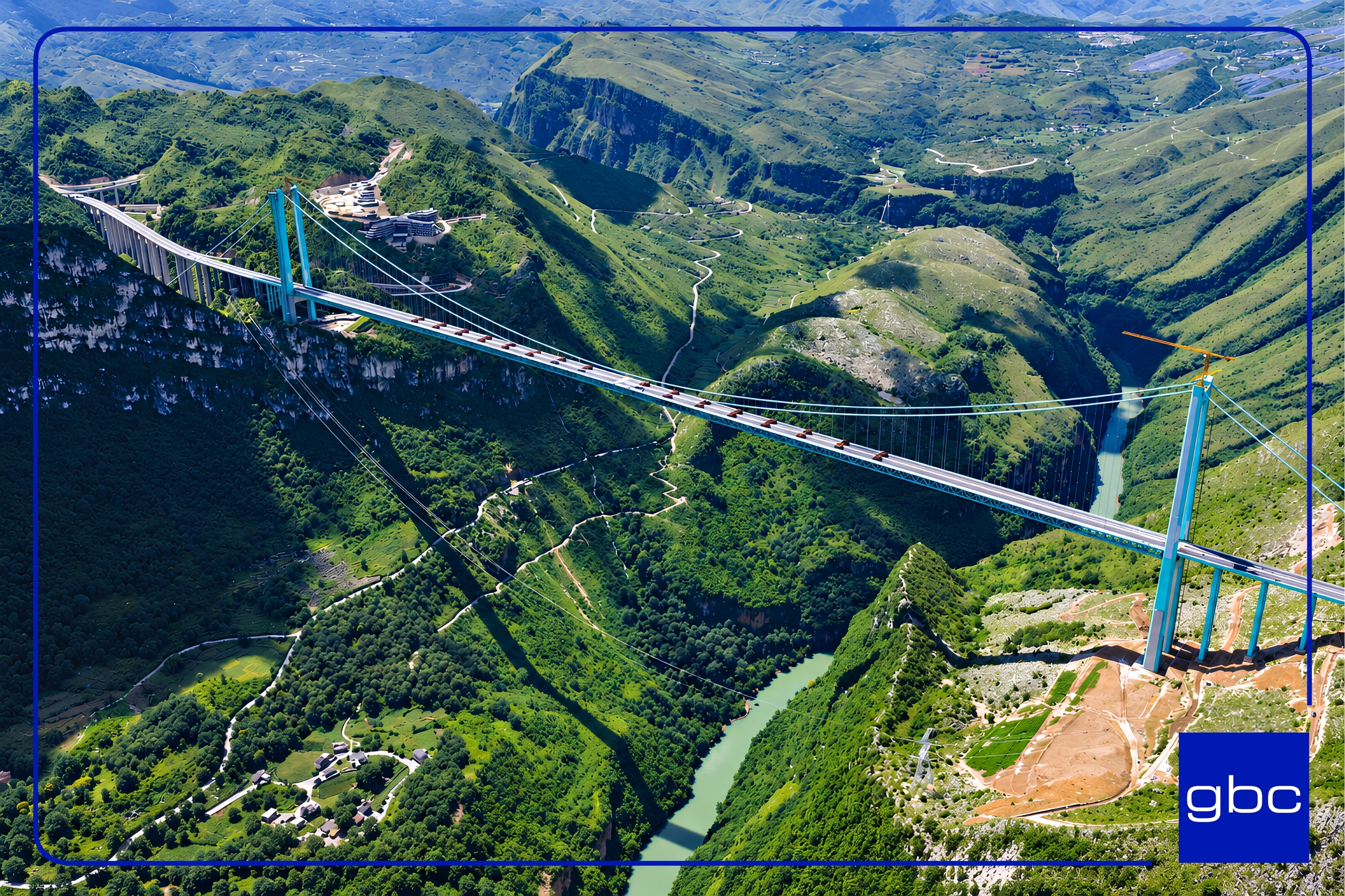
Photo: Huajiang Grand Canyon Bridge
Read more: Five of the World's Longest Bridges: Engineering Explained
Tallest bridge by structural height: Millau Viaduct
The Millau Viaduct in southern France holds the Guinness World Record for the tallest bridge by structural height at 336.4 m. It carries the A75 motorway across the Tarn Valley for 2,460 m, supported by seven concrete piers beneath a continuous steel deck.
The bridge's height creates two competing requirements. The piers need enough stiffness to resist wind, but the steel deck also expands and contracts as temperatures change. Thermal movement can reach about 0.60 m at each end of the bridge.
Making every pier extremely stiff would restrict that movement and add stress to the structure. To avoid this, engineers kept the lower parts of the piers large and stiff, while splitting the upper 90 m into two slimmer columns. The arrangement maintains stability while giving the deck more freedom to move longitudinally.
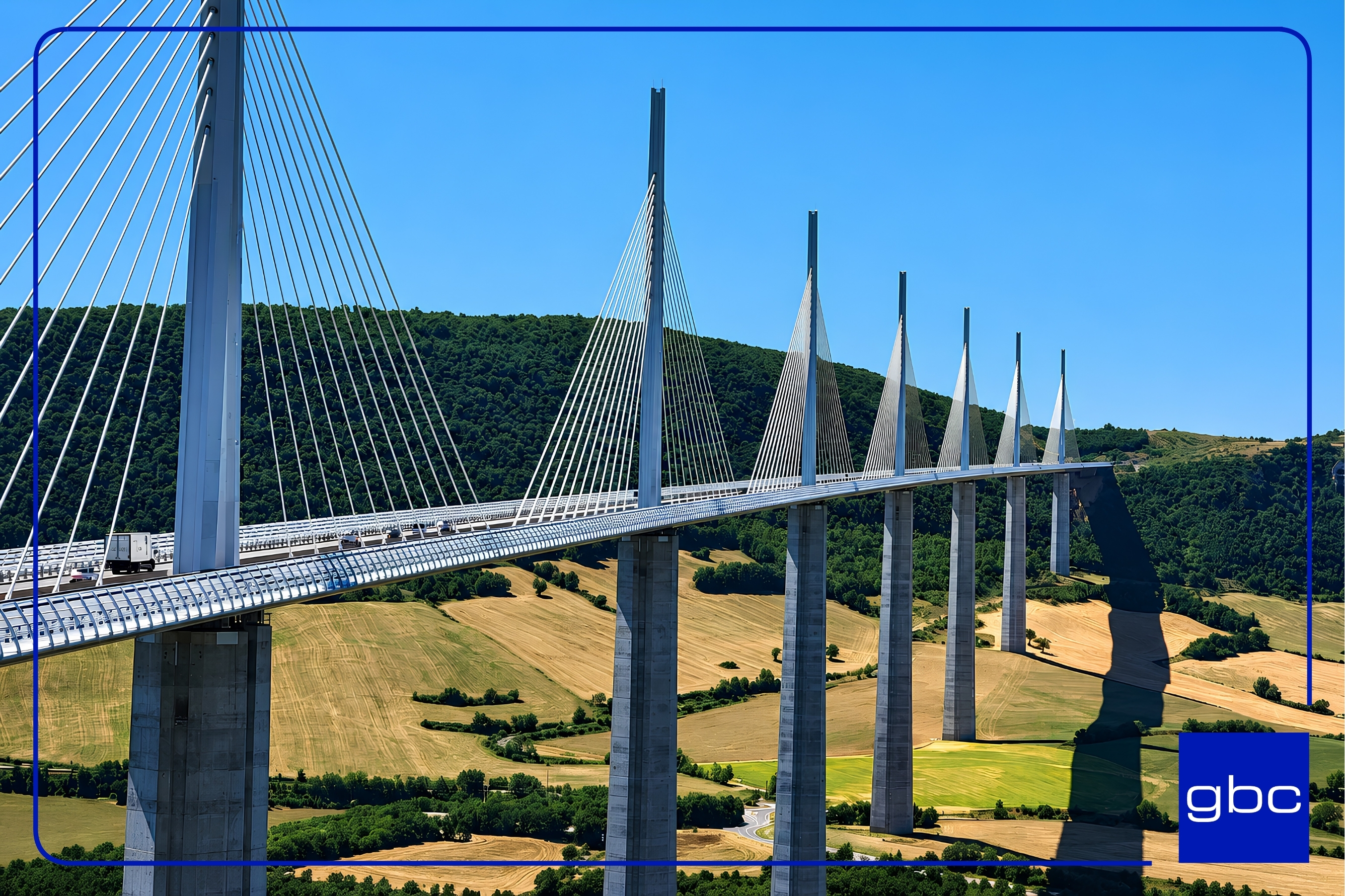
Photo: Millau Viaduct. Source: Vladan Raznatovic/Unsplash.
Longest suspension bridge span: 1915 Çanakkale Bridge
The 1915 Çanakkale Bridge crosses the Dardanelles in Türkiye with a 2,023 m main span, the longest suspension bridge span in the world.
For a bridge at this scale, one of the most difficult periods is not necessarily after completion but during construction. The structural system changes every time a tower segment, cable or deck section is added, so the bridge can behave very differently from one construction stage to the next.
Wind, temperature and seismic loads also continue to act while the structure is incomplete. To understand those changing conditions, engineers modeled 183 construction stages from tower erection through to long-term settlement. TCL and Python scripts helped automate the modeling process and identify potential technical issues before they reached the construction site.
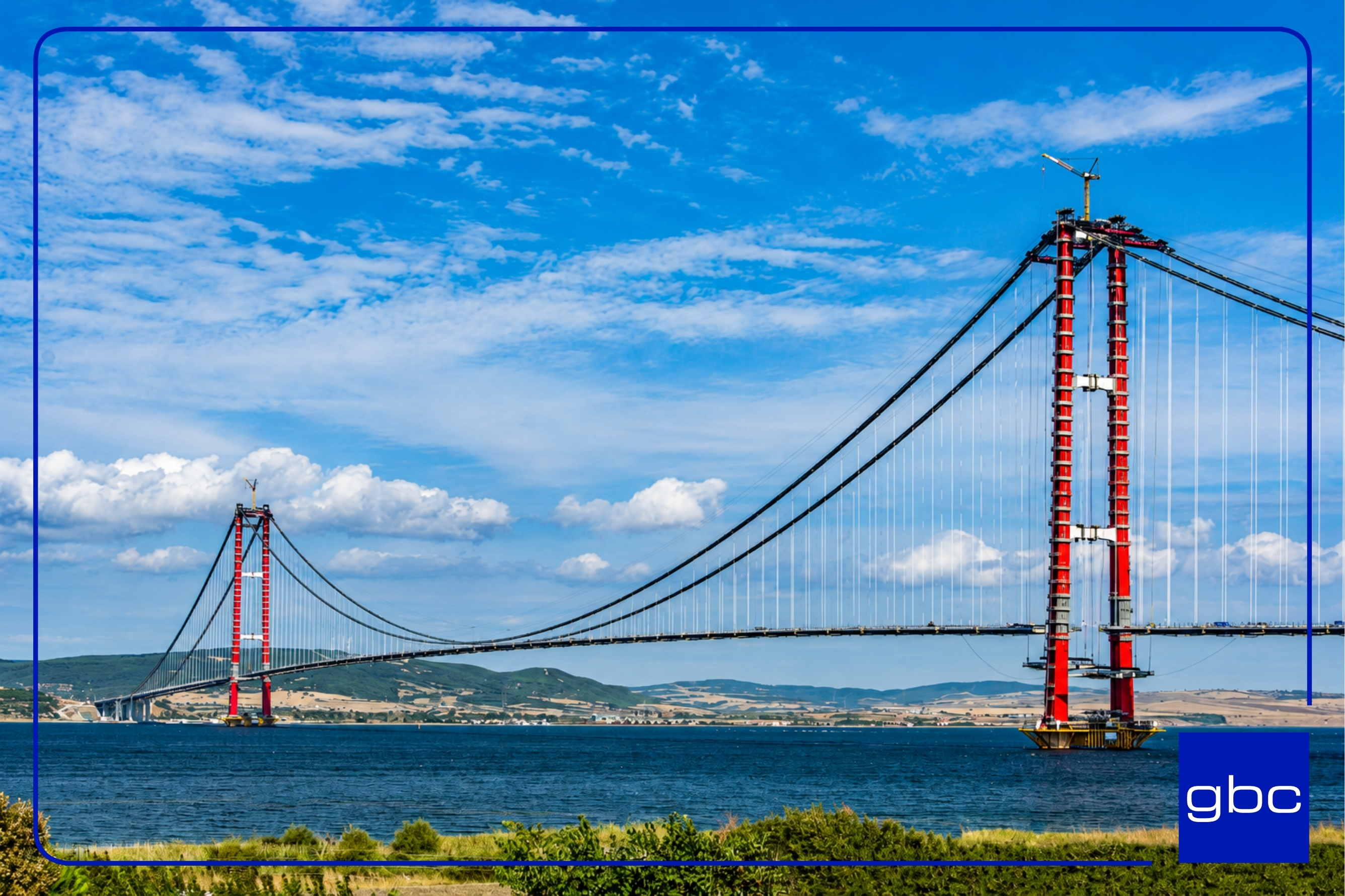
Photo: 1915 Çanakkale Bridge
Longest cable-stayed bridge span: Changtai Yangtze River Bridge
The Changtai Yangtze River Bridge in China extends 10.03 km between Changzhou and Taizhou. The bridge has a 1,176 m main cable-stayed span, the longest in the world for this bridge type. Two 350 m towers support the main span.
Temperature changes cause the long steel deck to expand and contract. Restricting that movement too much builds up internal forces, so engineers need a solution that controls the movement without over-stiffening the structure. Engineers installed 28 horizontal carbon-fiber cables between the steel truss and the tower crossbeams. Carbon fiber is less temperature-sensitive than steel and adds little weight, so the cables control longitudinal movement without a much heavier structural system.
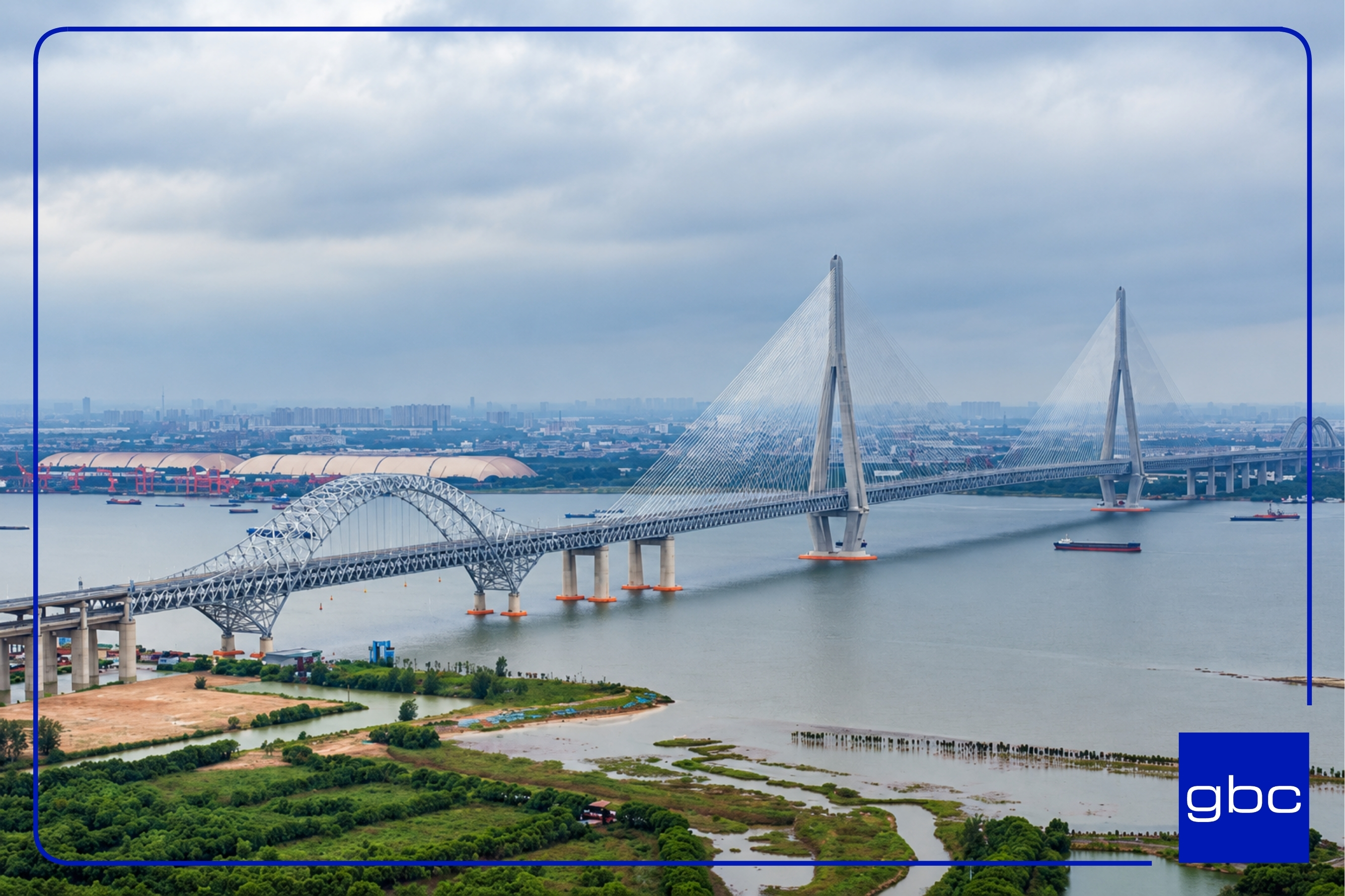
Photo: Changtai Yangtze River Bridge. Source: Xinhua/ The State Council The People's Republic Of China
Read more: When Bridges Fail: 3 Lessons from Structural Failures
Longest glass-bottom bridge: Huangchuan Three Gorges Glass Bridge
The Huangchuan Three Gorges Glass Bridge in Qingyuan, Guangdong, is a 526.14 m pedestrian suspension bridge and holds the Guinness World Record for the longest glass-bottom bridge. It opened in 2020 in a region that regularly experiences typhoons.
The bridge has a long, lightweight structure, so wind becomes an important design condition. Engineers used wind tunnel testing and finite element models to study natural frequencies, vibration modes and the wind speeds that could cause unstable movement.
The railings were also part of the aerodynamic problem, since their openness changes how air passes around the deck. Engineers tested different configurations and added diagonal wind cables along both sides to improve lateral stability.
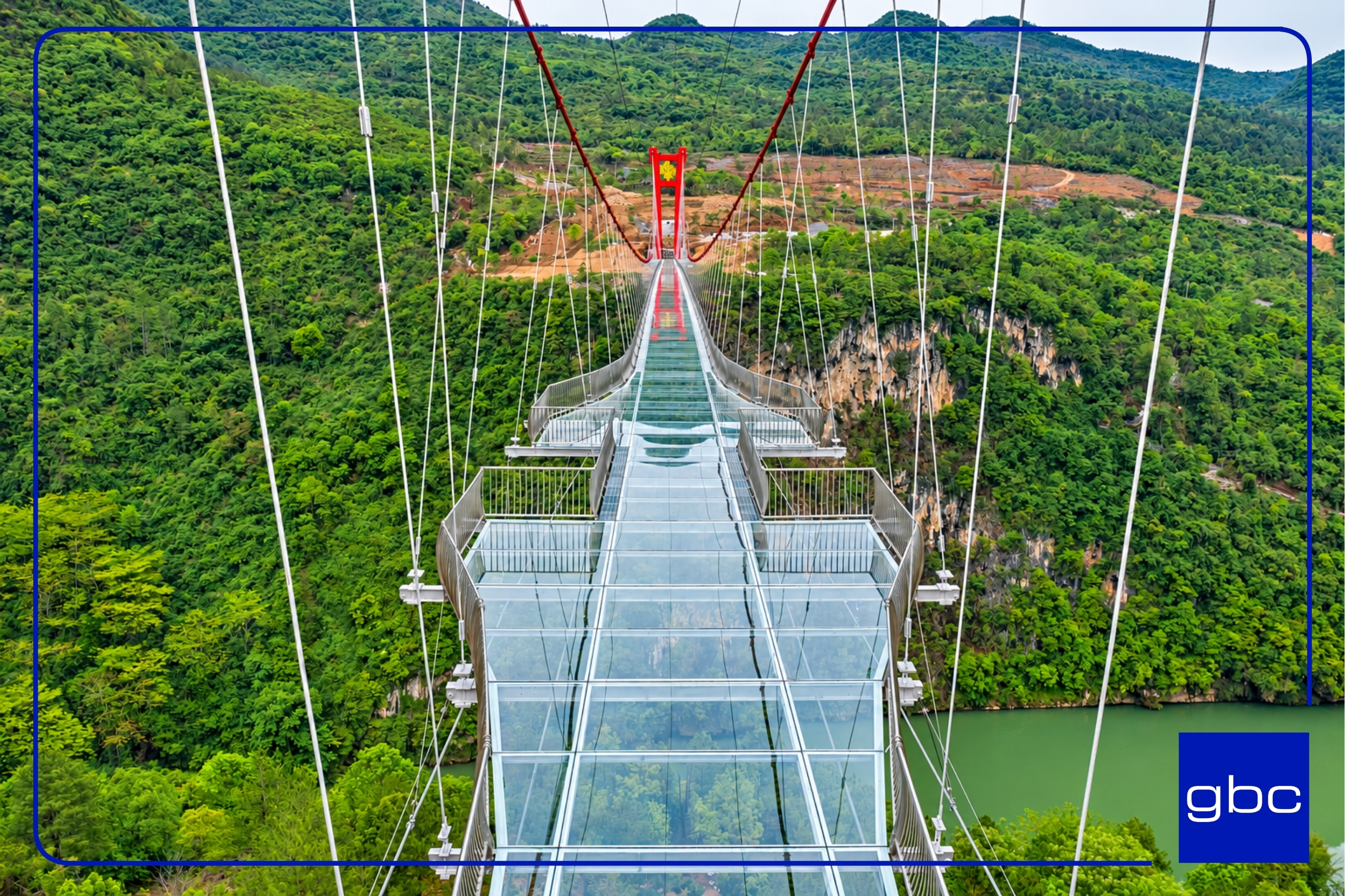
Photo: Huangchuan Three Gorges Glass Bridge. Source: Lianzhou Qingtian Tourism Development Co., Ltd.
Longest floating bridge: Evergreen Point Floating Bridge
The Evergreen Point Floating Bridge carries SR 520 across Lake Washington between Seattle and Bellevue. The floating section extends 2,349.55 m, making the Evergreen Point Floating Bridge the longest floating bridge in the world. The structure uses 77 concrete pontoons and 58 anchors to support and hold the bridge in position.
The record comes directly from the site conditions. Lake depths of up to 65 m and soft ground made conventional foundations difficult and expensive. A suspension bridge would have required towers around 192 m high and a straighter alignment than the existing route allowed.
The design therefore replaces conventional piers with buoyancy to support much of the crossing. That solves the foundation problem but creates a different structural condition: wind and waves can make the pontoons bend, move vertically and twist. The bridge therefore has to be designed as a floating structure, not one fixed to the lakebed.
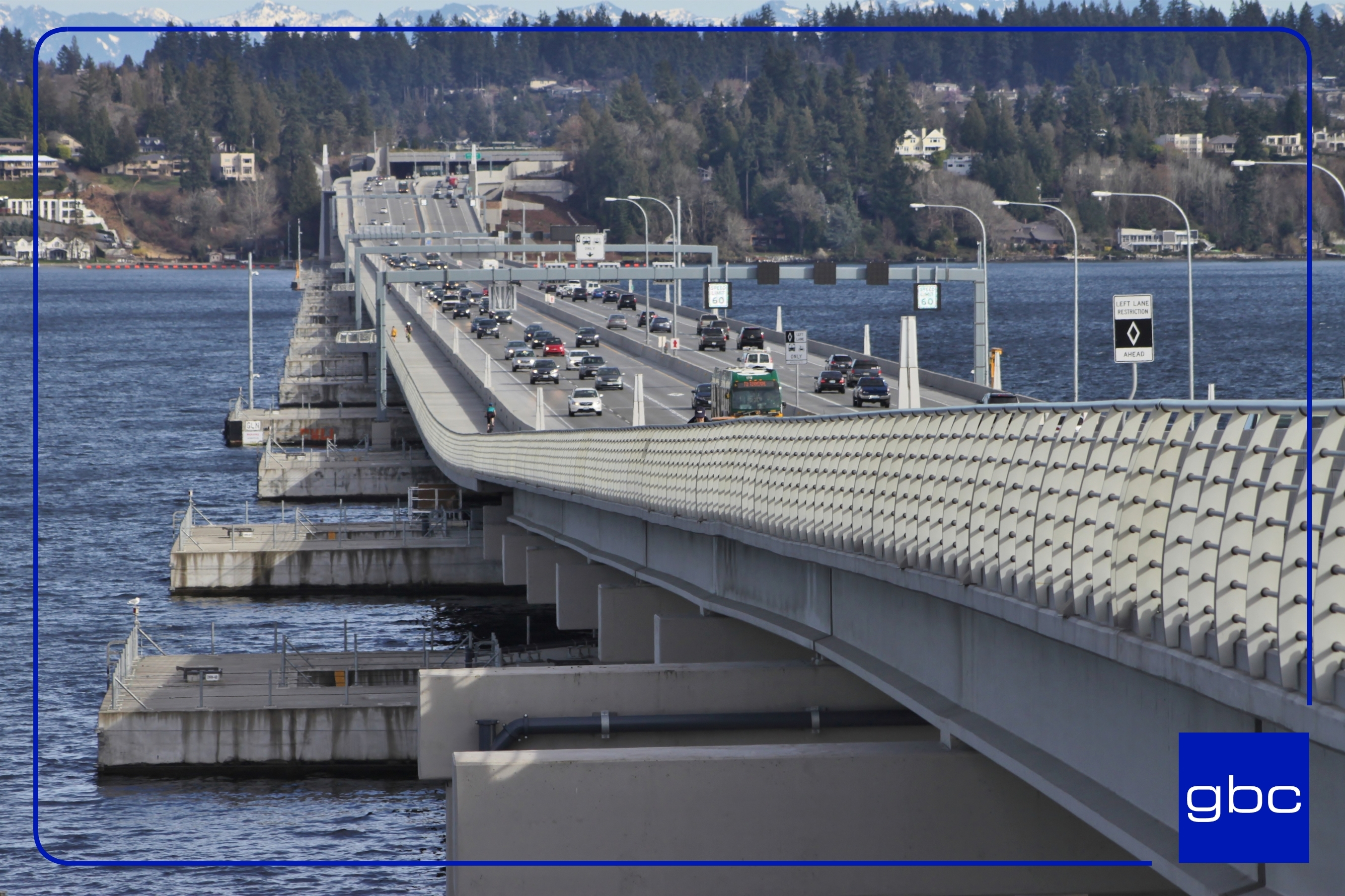
Photo: Evergreen Point Floating Bridge. Source: SounderBruce.
Longest bridge-cum-tunnel sea crossing: Hong Kong-Zhuhai-Macao Bridge
The Hong Kong-Zhuhai-Macao Bridge forms a 55 km link across the Pearl River Delta and is the longest bridge-cum-tunnel sea crossing in the world.
Near Hong Kong International Airport, engineers faced two requirements that could not be met by the same structure: ships needed clearance through the shipping channels, but towers tall enough for that clearance would exceed airport height limits.
Engineers moved part of the route below the shipping channels, so that different parts of the crossing could meet each condition. The crossing includes an approximately 6.7 km tunnel, with a 5.664 km immersed section made from 33 concrete elements. Two artificial islands connect the tunnel with the bridge sections.
This is one of the clearest examples in the article of the site conditions determining not only the dimensions of a structure, but the type of infrastructure used.
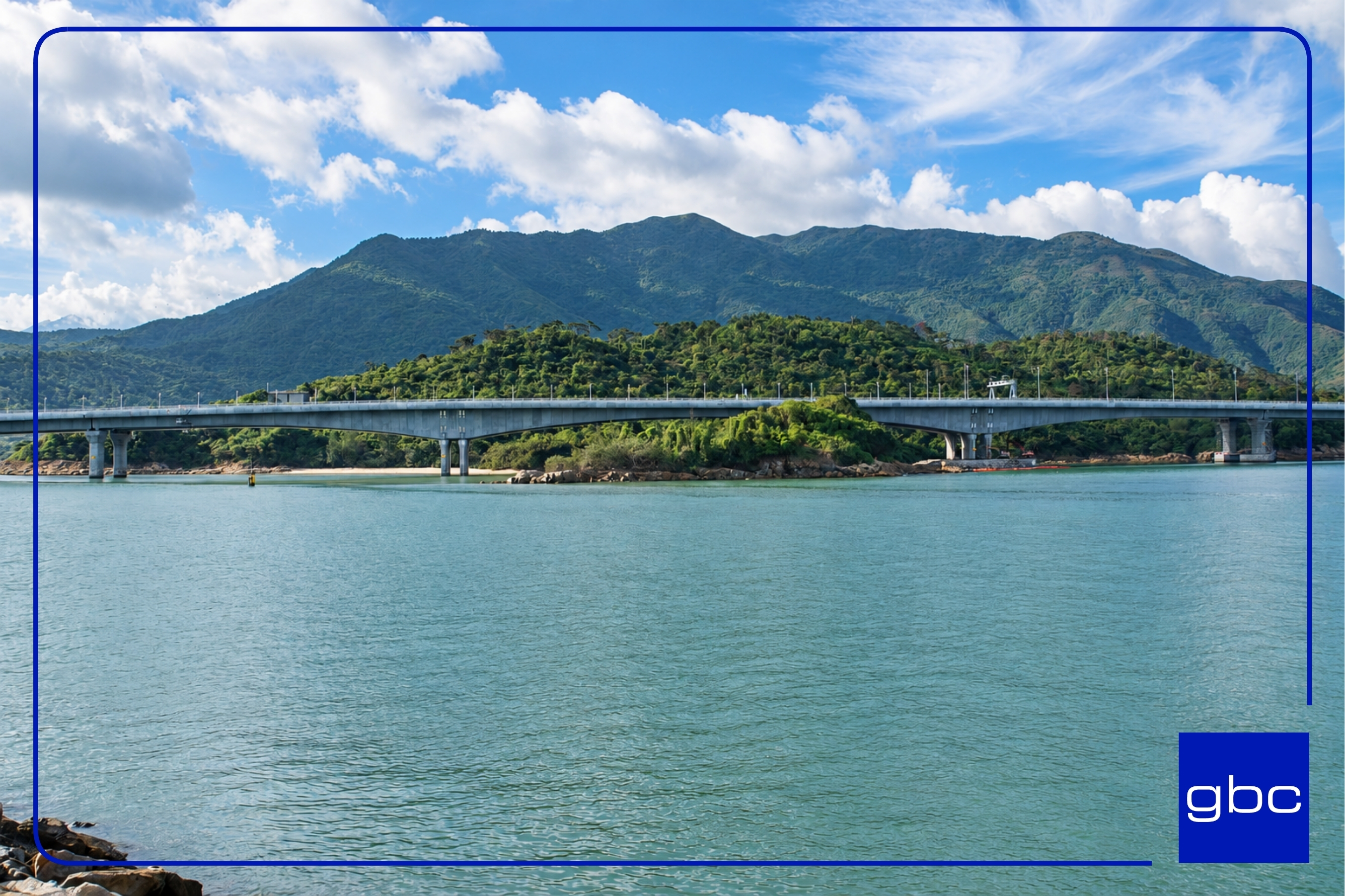
Photo: Hong Kong-Zhuhai-Macao Bridge. Source: HZMB.
Read more: 5 Signs Your Infrastructure Bridge or Building Needs Inspection
Conclusion
These seven world record-breaking bridges reach very different extremes, but the engineering pattern is similar: pushing a bridge type to an extreme scale makes one condition decisive, whether that is wind, temperature movement, construction sequencing, foundations or site constraints.
The engineering response is therefore not simply to make a familiar bridge larger. The first task is to understand which condition controls the design, then develop a structural system, construction method or combination of infrastructure types that responds to it.
Frequently asked questions
What is the difference between the highest and tallest bridge in the world?
The highest bridge is measured by the vertical distance from the bridge deck to the ground or water below. The tallest bridge is measured by the overall structural height of the bridge itself.
Why do record-breaking bridges need different engineering solutions?
Extreme height, span, terrain, wind, ground conditions or navigation requirements can push a conventional bridge system beyond its usual design conditions. Engineers may need different structural details, analysis methods, construction sequences or even another type of infrastructure.
Which bridge type can achieve the longest main spans?
Suspension bridges generally achieve the longest main spans because the main cables can carry loads efficiently between widely spaced towers.
Why are construction stages important for very long bridges?
A bridge's stiffness, supports and load paths change as elements are added, so very large bridges are analyzed across many individual construction stages, not just the finished structure.
|
About us
gbc engineers
is an international engineering consultancy with offices in Germany, Poland, and South East Asia, having delivered 500+ projects worldwide. We provide services in structural engineering, data center design, infrastructure and bridge engineering, BIM & Scan-to-BIM, and construction management. Combining German engineering quality with international expertise, we achieve sustainable, safe, and efficient solutions for our clients.
|