Data center demand keeps growing every year, and much of that growth is outpacing what power grids can add in clean electricity. That shortfall raises the stakes for everything else in the building, from how much energy it draws to how much water it uses for cooling.
A sustainable data center is designed to address all of that at once, combining efficient cooling, cleaner power sourcing and smarter water use. gbc engineers explains what defines a sustainable data center, how it is measured and which facilities are already leading the way.
What is a sustainable data center?
A sustainable data center reduces its environmental impact across three areas: energy, water and materials, while keeping the reliability clients need. It is a mix of design choices, from how heat leaves the servers to where the power comes from.
- Energy: High-efficiency cooling, renewable power sourcing, workload consolidation
- Water: Closed-loop or low-water cooling systems, water reuse
- Materials and lifecycle: Equipment reuse, longer hardware refresh cycles, responsible disposal
Read more: Data Center Water Use: Sustainable Cooling Design
How does a sustainable data center differ from a traditional one?
The difference between a traditional and a sustainable data center shows up most clearly in the numbers operators report. The Uptime Institute's 2025 survey found new facilities averaging a PUE of 1.48, and facilities in cooler regions of North America and Europe reaching 1.3 or better. That's a sharp improvement from 2007, when the industry average PUE was 2.50, falling to 1.54 by 2025.
This progress is visible because operators track a small set of standard metrics:
- PUE (Power Usage Effectiveness): total facility energy divided by IT equipment energy alone, where 1.0 is the minimum.
- WUE (Water Usage Effectiveness): liters of water used for cooling per kilowatt-hour of IT energy.
- Carbon accounting: fuel use (Scope 1), purchased electricity (Scope 2), and supply-chain emissions (Scope 3), tracked under the GHG Protocol.
|
Aspect
|
Traditional data center
|
Sustainable data center
|
|
PUE
|
Often 1.8 to 2.5
|
Typically 1.1 to 1.4
|
|
Cooling
|
Air-based, chiller-heavy
|
Liquid, free-air or AI-optimized
|
|
Power source
|
Grid mix, mostly fossil-based
|
Matched to renewables via power purchase agreements or on-site generation
|
|
Water use
|
High, often open-loop
|
Closed-loop or near-waterless
|
|
Waste heat
|
Vented to the atmosphere
|
Captured and reused, often for district heating
|
|
Reporting
|
Limited or none
|
PUE, WUE and carbon tracked and reported
|
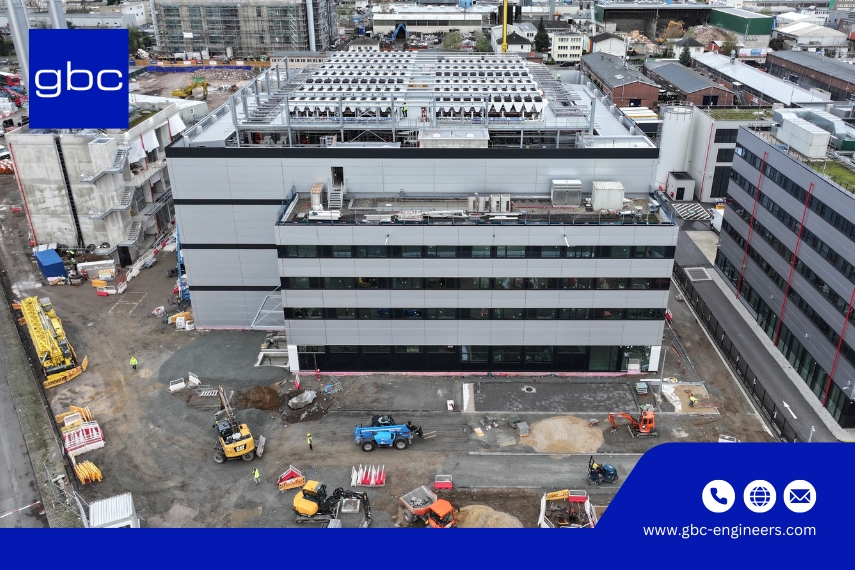
What technologies make a data center sustainable?
A facility's environmental footprint depends on methods working together. Each method makes a modest difference by itself, but combined, they add up to significant, measurable gains. Cooling and power use account for the largest share of a data center's total energy, so the technologies below focus on those two areas first.
- Liquid and free-air cooling removes heat from servers more efficiently than traditional air-based systems, reducing overall energy consumption and, in many implementations, cutting water use as well.
- AI-driven thermal management continuously adjusts cooling output to match real-time server load instead of running at a fixed rate, avoiding the energy waste of over-cooling during low-demand periods.
- Renewable power sourcing supplies the facility with solar, wind or hydro power, either through on-site microgrids or long-term power purchase agreements, reducing reliance on fossil-based grid electricity.
- Waste heat reuse captures heat generated by servers and routes it into district heating networks, turning what would otherwise be wasted energy into a usable resource for surrounding buildings.
- Server virtualization consolidates workloads onto fewer physical machines, reducing the amount of hardware required and minimizing energy lost to idle capacity.
Read more: Why data center construction projects go over budget
Why is sustainability becoming a major focus for data centers?
Data center sustainability is urgent right now because demand, regulation and economics are all pushing in the same direction at once.
- Demand is outrunning clean power. Data centers already use a rising share of global electricity, and AI workloads are growing that demand faster than most grids can add clean power.
- Regulation is making efficiency mandatory in some markets and easing it in others. The EU requires water-use reporting under its Energy Efficiency Directive, and China and Japan have set minimum PUE standards, even as the EU's Omnibus rules ease broader GHG reporting for smaller operators.
- Economics rewards efficiency over decades. A facility typically runs for 15 to 20 years, so a lower PUE compounds into a large amount of avoided electricity use over that lifetime.
Read more: Direct-to-Chip vs Immersion Cooling
Top 10 sustainable data centers
The best-performing data centers now report PUE scores between 1.04 and 1.15, well below the global average of 1.5 to 1.6. Data Centre Magazine's February 2026 ranking shows ten facilities that hit those numbers in practice:
|
Top #
|
Facility
|
Location
|
Standout metric
|
|
1
|
Google, Lancaster and Columbus
|
Ohio, US
|
Audited PUE of 1.04 to 1.06
|
|
2
|
National Laboratory of the Rockies
|
Colorado, US
|
PUE near 1.04, dry-air cooling
|
|
3
|
Meta hyperscale campuses
|
Multiple US sites
|
WUE near 0.20 L/kWh, a tenth of the industry average
|
|
4
|
AWS global fleet
|
Multiple global sites
|
Average PUE of 1.15, WUE of 0.19 L/kWh
|
|
5
|
Verne
|
Keflavik, Iceland
|
PUE of 1.06, on geothermal and hydro power
|
|
6
|
Lefdal Mine Data Center
|
Måløy, Norway
|
PUE of 1.15, seawater cooling and hydro-powered operation
|
|
7
|
Microsoft global fleet (newest regions)
|
Multiple global locations
|
Average PUE of 1.16, WUE of approximately 0.30 L/kWh
|
|
8
|
LinkedIn's Hillsboro facility
|
Oregon, US
|
PUE of 1.06, free cooling for approximately 95% of the year
|
|
9
|
Start Campus (SINES DC)
|
Sines, Portugal
|
Target PUE of approximately 1.1, seawater cooling and 100% renewable energy
|
|
10
|
Moro Hub
|
Dubai, UAE
|
World's largest solar-powered data center, powered by the Mohammed bin Rashid Al Maktoum Solar Park
|
How facility design affects a data center's sustainability
A sustainability plan only works if the building itself can support it. Liquid cooling loops, heat-reuse piping and on-site renewable equipment all add weight, space and access needs. Those requirements have to be planned into the building's structure from the start, because retrofitting them later is much harder.
- Cooling infrastructure load. Liquid cooling systems are heavier and denser than air handling units. That changes floor loading and support needs.
- Heat-reuse routing. Piping heat to a district network needs structural openings planned early. Adding them later is harder.
- Renewable and retrofit constraints. On-site solar, battery storage and cooling upgrades depend on structural capacity older buildings rarely have.
Each of these three, cooling load, heat-reuse routing and renewable capacity, gets far more expensive to fix once construction starts. gbc engineers will support data center clients from day one.
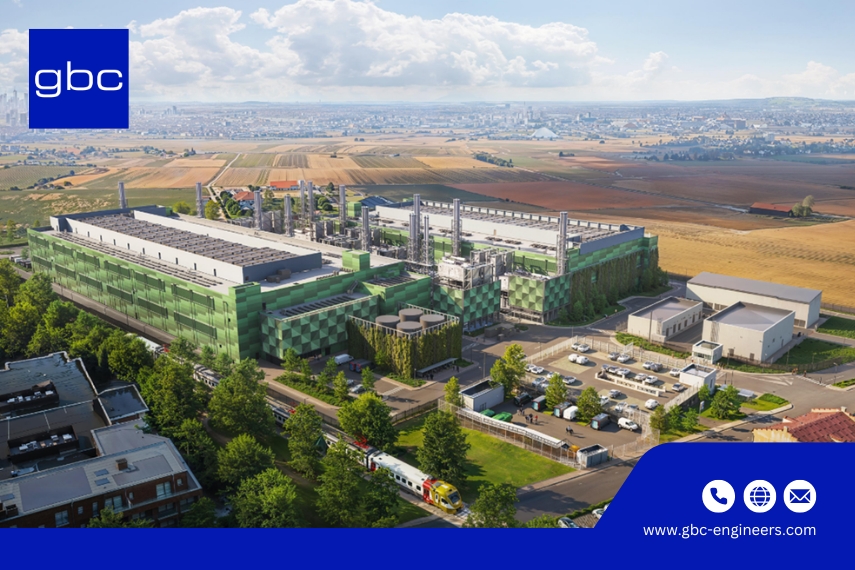
Conclusion
PUE did not fall from 2.50 to near 1.04 through better equipment alone. It fell because cooling, power and structural design were engineered together from the first drawing, not bolted on after the fact. That means sizing floor loads for liquid cooling before the layout is fixed, routing structural openings for heat-reuse piping before the shell is built and confirming the building can carry future solar, battery or retrofit loads before they are needed.
Treat sustainability as a structural requirement from day one. gbc engineers provides the structural and BIM engineering that supports these systems, helping data center clients plan before construction begins.
Frequently Asked Questions
Can data centers be eco-friendly?
Yes. Modern data centers can significantly reduce their environmental impact through energy-efficient design, renewable electricity, advanced cooling technologies, water conservation and responsible lifecycle management. While no facility has zero impact, many leading operators now achieve low PUE and WUE values while sourcing most or all of their electricity from renewable energy.
How can we make energy-intensive data centers more sustainable?
The biggest improvements come from reducing energy demand before adding more power. Operators can deploy high-efficiency cooling systems, optimize airflow with AI-based controls, adopt liquid cooling for high-density workloads, purchase or generate renewable electricity, reuse waste heat where practical and monitor metrics such as PUE and WUE to drive continuous improvement.
What counts as a good PUE score for a data center?
Industry surveys put the global average PUE at roughly 1.5 to 1.6, so anything below that is efficient. The best hyperscale facilities report figures closer to 1.1, which usually means purpose-built systems, not upgrades.
Can an existing data center be retrofitted for sustainability, or does it need to be built new?
Retrofits are common, and cooling upgrades are usually the easiest entry point since they fit within existing floor space. Renewable power or a full electrical overhaul is harder, since it needs capacity the building may lack.
Does the location of a data center affect how sustainable it can be?
Yes. Climate affects cooling energy needs, grid mix sets how low-carbon that power already is, and proximity to a district heating network decides whether waste heat reuse works at all.
|
About us
gbc engineers
is an international engineering consultancy with offices in Germany, Poland, and South East Asia, having delivered 500+ projects worldwide. We provide services in structural engineering, data center design, infrastructure and bridge engineering, BIM & Scan-to-BIM, and construction management. Combining German engineering quality with international expertise, we achieve sustainable, safe, and efficient solutions for our clients.
|