Reviewed by Yoan Guyon, Managing Director at gbc engineers
When a data center project lands 20 or 30% over budget, the review almost always starts on the construction site. The general contractor is asked to account for the change orders, the schedule slips and the cost growth. It is a familiar ritual, and it usually points at the wrong place. By the time a crew is mobilized, most of the overrun has already been committed.
The expensive decisions in data center construction are made months earlier: in the rack density written into the brief, in the week the electrical gear was ordered, and in a financing model that assumed a fixed energization date. Construction is where the overrun becomes visible, not where it was created.
Why the contractor gets the blame anyway
There is a structural reason the builder absorbs the criticism. The overrun shows up on the contractor's invoices, in change orders and extended general conditions, so the paper trail points at the site. The front-end decisions that caused it left no comparable trail: no line item with the contractor's name on it.
So the post-mortem follows the invoices rather than the cause. The project team audits what is visible in site execution and barely examines the larger share shaped by design, procurement and energization decisions. That is the pattern worth breaking. Building a data center on budget depends far more on choices made before mobilization than on site performance after it.
Where does the money in data center construction actually go?
The instinct to blame the builder assumes the building is the cost. In most data center construction projects, the structural shell is a minority of the budget.
The mechanical and electrical systems carry the rest: switchgear, generators and the cooling plant. Industry cost studies put the combined figure at 60 to 70% or more of construction cost. Land and concrete are comparatively cheap.
The table below gives an indicative split for an enterprise-grade facility. The exact figures move with tier, climate and density, but the shape holds across most projects.
|
Cost element
|
Indicative share of construction cost
|
Who controls it
|
|
Electrical systems (switchgear, UPS, generators, distribution)
|
35 to 45%
|
Equipment vendors, owner procurement
|
|
Mechanical and cooling plant
|
20 to 30%
|
Equipment vendors, owner procurement
|
|
Structural shell and core
|
10 to 15%
|
General contractor
|
|
Site, civil and land preparation
|
5 to 10%
|
General contractor
|
|
IT fit-out, controls and commissioning
|
5 to 10%
|
Owner, integrators
|
Once the design basis, ground conditions and load assumptions are resolved, structural and civil packages are more predictable than the equipment packages driving power, cooling and commissioning. The volatile money sits in equipment that most general contractors neither manufacture nor schedule.
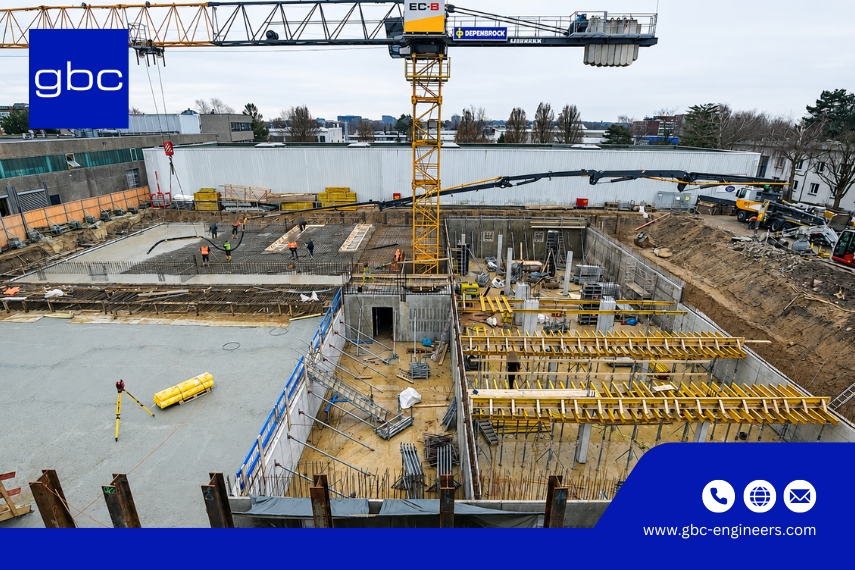
Why do data center construction projects go over budget before they break ground?
Ask why projects go over budget and the overrun is usually decided at the front end, not on site. 6 factors drive most of it. The first four come from decisions locked in before mobilization.
Reason 1: The density assumption the market outruns
A brief written for 8 to 10 kilowatts per rack, then pushed to 40 kilowatts or more mid-design, forces a full redesign of power and cooling. It is a planning assumption the market overtook between approval and delivery, not a construction error.
Reason 2: A design released before it is resolved
Owners under schedule pressure issue drawings before all questions are answered, then settle them through change orders. Change orders are the most expensive place to make a decision: the work is already moving and every change ripples through trades on site.
Reason 3: A grid connection date the project team does not fully control
In a growing number of markets, the utility holds the schedule. Interconnection queues and substation upgrades run for years, and a budget resting on an energization date the owner does not control is exposed every day that date moves.
Reason 4: Procurement sequencing
When long-lead electrical gear gets ordered matters as much as what gets ordered. Most projects treat the equipment order as something that follows the design. The projects that stay on schedule treat it differently.
They run procurement in parallel with design, accepting a small risk of specification change in exchange for a protected delivery window. That requires early definition of technical ranges and tolerances, so procurement can move without waiting for the design to fully resolve.
Reason 5: Long-lead equipment sets the schedule, not the crew
The single most reliable driver of a blown data center construction schedule is equipment lead time. Since 2021, lead times for the core electrical gear have stretched well beyond what older planning models assumed. A contractor cannot pour its way out of a transformer that arrives many months after it was needed.
The table below lists the equipment that most often controls the critical path, with lead times in the ranges reported across the industry in recent years.
|
Long-lead item
|
Indicative lead time (recent years)
|
Why it controls the schedule
|
|
Large power transformers
|
12 to 24 months or more
|
No power into the building until installed
|
|
Medium-voltage switchgear
|
12 to 18 months
|
Gates electrical distribution and commissioning
|
|
Standby generators
|
12 to 20 months
|
Required for redundancy validation, resilience targets and commissioning sign-off
|
|
Chillers and cooling distribution units
|
6 to 14 months
|
Gates heat rejection for high-density loads
|
When the gear is ordered late, the building waits, and a finished shell sitting idle is still burning capital. The owner who sets the procurement calendar, not the crew laying conduit, controls this risk.
Reason 6: The cost of delay is the line item most budgets ignore
Here is the part that rarely appears in the budget. A project budget tracks capital expenditure on shell, power and cooling. What it seldom tracks is the cost of being late.
A leased facility 6 months behind schedule carries 6 months of lost lease revenue plus financing costs on capital already deployed. That number can dwarf the change orders being argued about in the review meeting. The construction overrun is often smaller than the revenue the delay quietly destroyed.
Take a leased facility of 20 megawatts. Contracted revenue runs into the low tens of millions a year, and the developer is paying financing on hundreds of millions while the building sits dark. Against those numbers, a few million in change orders is a rounding error. Figures are directional, but the ranking rarely changes.
The delay is the expensive event. An owner who shaves a few percent off construction cost while accepting schedule risk on long-lead equipment is usually optimizing the wrong variable. Revenue timing and operating costs, not build cost alone, decide whether a project paid off.
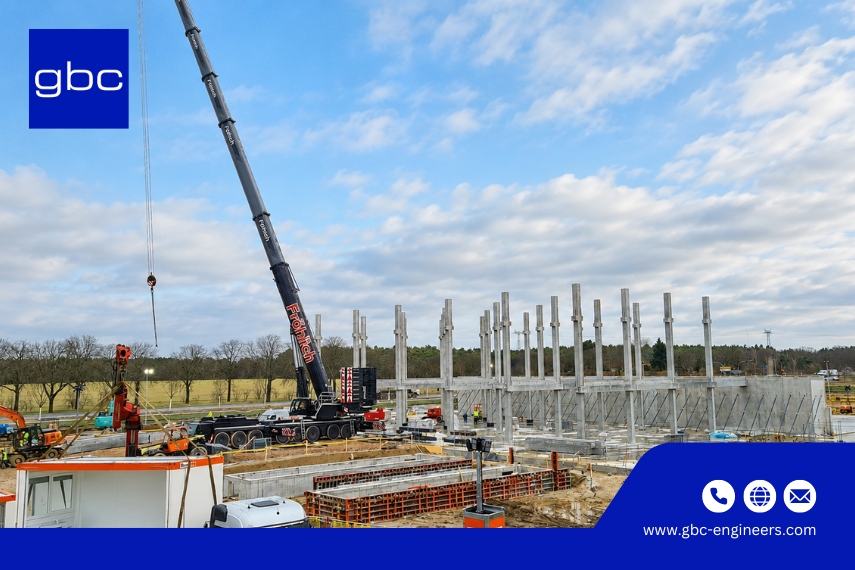
Read more: Hyperscale vs. Colocation: Does Structural Design Actually Need to Be Different?
What are the main data center construction cost trends in 2026?
Part of why budgets miss is that the cost of a data center keeps moving while the project is in flight. 3 pressures are pushing 2026 numbers past the figures that older models assume.
Equipment and electrical escalation comes first. Prices for the core electrical gear have not returned to pre-2021 levels.
Turner & Townsend reported construction costs up 5.5% in 2025, with a 7 to 10% additional premium for AI-oriented liquid-cooled facilities in the United States. JLL projects the average global cost will reach USD 11.3 million per megawatt in 2026.
Power scarcity is the second. In many markets, the binding constraint is no longer land or capital but available grid capacity. Sites are increasingly chosen for the power they can secure. That changes the economics before a single drawing is issued.
Density inflation is the third. As rack densities climb, a facility designed around last year's assumptions needs more power and cooling per square meter than the original model priced. A budget built on a stale density figure is behind before it starts.
Read more: The Construction Method Quietly Winning the AI Era
Where are data center construction costs heading by 2030?
Demand for data center capacity is set to grow substantially through the rest of the decade, driven primarily by AI processing infrastructure. For construction teams, the question is whether procurement, power and design maturity can keep pace.
Power will remain the binding constraint, and the industry conversation is shifting with it. On recent projects, the question gbc engineers hears most has shifted: less about cost per square meter, more about when the facility can be energized and at what density. That is a more useful framing than unit cost alone.
The table below contrasts what tends to get blamed for an overrun with what usually drives it.
|
Commonly blamed
|
Usual root cause
|
|
Contractor change orders
|
Design released for construction before it was mature
|
|
On-site labor and execution
|
Long-lead equipment ordered too late
|
|
Construction market pricing
|
Density assumption the market outran
|
|
General contractor performance
|
Energization date that slipped against a financing model
|
What the projects that hold their budget do differently
The projects that land on budget treat the front end as the place where it is won or lost, not the construction site.
They fix the density target deliberately late, with headroom built in, rather than freezing an early number the market will overtake. They order long-lead electrical gear early, often before the design is fully complete, letting procurement drive the design calendar.
They treat the utility interconnection date as a hard input to the financing model. And they carry a realistic contingency against escalation, not a token percentage that everyone privately knows is too thin.
None of this is glamorous, and none of it happens on site. It happens in procurement meetings and design reviews months before mobilization. The cheapest way to protect a data center budget is more attention at the front end, where commitments are actually made.
Conclusion
The contractor is the most visible party when a budget breaks, and the easiest to question. But projects that stay on budget are usually the ones where the hard calls on density, procurement sequencing and energization date were made well before anyone broke ground.
The most useful audit is of the assumptions and the procurement calendar locked in months earlier, not the build itself. That is where the budget is set, and where the next overrun will be decided.
Frequently asked questions
How much does it cost to build a data center?
A common rule of thumb puts the cost of a data center at roughly USD 9 to 13 million per megawatt of IT capacity, though the figure varies widely with tier, location and cooling design. A small enterprise facility can run into the tens of millions; a large hyperscale campus can reach several billion across all phases.
How much will be invested in data center infrastructure by 2030?
McKinsey estimates that meeting worldwide demand for AI alone could require around USD 5.2 trillion of investment in data centers by 2030 (roughly the combined annual GDP of France and Brazil). Broader estimates for the total compute build-out run higher, depending on the scope included.
How fast is the data center construction market growing?
The data center sector has been expanding strongly, though growth rates vary by source and market definition. JLL estimates the global sector could grow at around 14% annually over the next 5 years, driven by hyperscale, colocation, on-premises and AI-related capacity demand.
Why do data center projects go over budget?
Most often because of decisions made before construction starts: density assumptions the market outran, long-lead equipment ordered too late, designs released for construction before they were mature, and energization dates that slipped. Construction execution is rarely the true root cause, even though it is where the overrun first becomes visible.
|
About us
gbc engineers
is an international engineering consultancy with offices in Germany, Poland, and Vietnam, having delivered 10,000+ projects worldwide. We provide services in structural engineering, data center design, infrastructure and bridge engineering, BIM & Scan-to-BIM, and construction management. Combining German engineering quality with international expertise, we achieve sustainable, safe, and efficient solutions for our clients.
|