The Eshima Ohashi Bridge in Japan has a maximum gradient of 6.1%, about 3.5 degrees, yet photos taken from across the water make it look almost vertical. A bridge can look terrifying without being unsafe, and that gap between appearance and behavior is the idea behind this list.
Through 10 of the world’s scariest bridges, gbc engineers explores where that fear comes from and what the engineering reveals about each crossing. Some challenge our perception through height, exposure or scale. Others raise more complex questions about wind, vibration and structural movement.
6 scariest bridges that feel extreme because of what you see
For these six bridges, the fear comes mainly from what people can see: deep drops, transparent or open decks, roads that look extremely steep, or water stretching for kilometers ahead. In most cases, however, the actual engineering conditions are far less extreme than they appear.
1. Royal Gorge Bridge, USA: a wooden deck 956 feet (291 m) above the river
The Royal Gorge Bridge crosses the Arkansas River at a height of 956 feet (291 m), with a deck made from 1,257 wooden planks. Although it may look like a simple wooden walkway, it is part of a suspension bridge that has been in operation since 1929.
Its condition is closely monitored. Around 250 deck planks are replaced each year, and the bridge also undergoes safety inspections by the Colorado Department of Transportation, along with regular maintenance and technical checks.
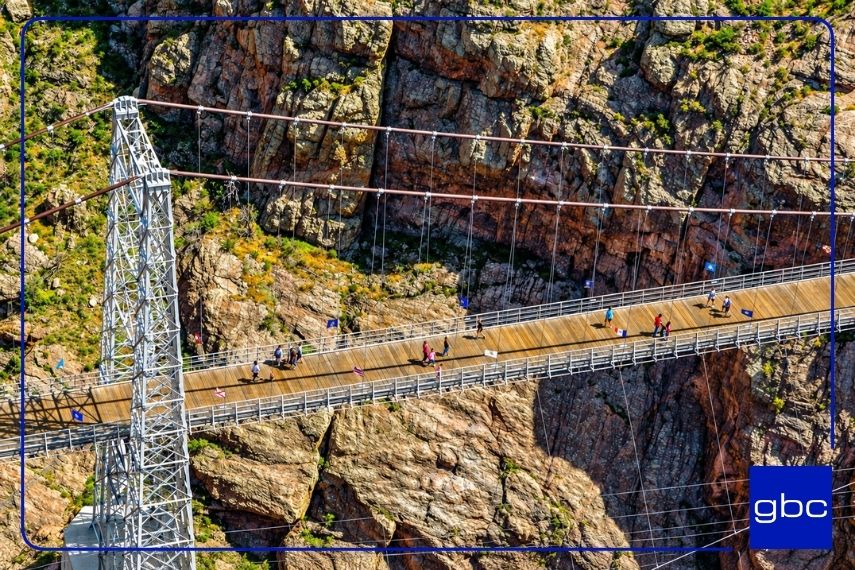
Photo: Royal Gorge Bridge, USA. Source: Royal Gorge Bridge & Park America's Bridge.
2. Zhangjiajie Glass Bridge, China: a transparent deck 300 m above the valley
The Zhangjiajie Glass Bridge stretches 430 m across a canyon about 300 m deep. Its deck consists of 99 panels of three-layer tempered glass.
Before opening, the bridge went through nearly 100 safety tests. In one public test, volunteers struck a glass panel with sledgehammers before an SUV carrying 11 people drove across the damaged surface. The top layer cracked, but the panel did not collapse or fail completely.
Another test placed a two-ton truck on the bridge, while the structure itself was designed to carry the equivalent of 800 people at the same time. These tests therefore examined not only normal loading, but also how the layered glass system performs after local damage.
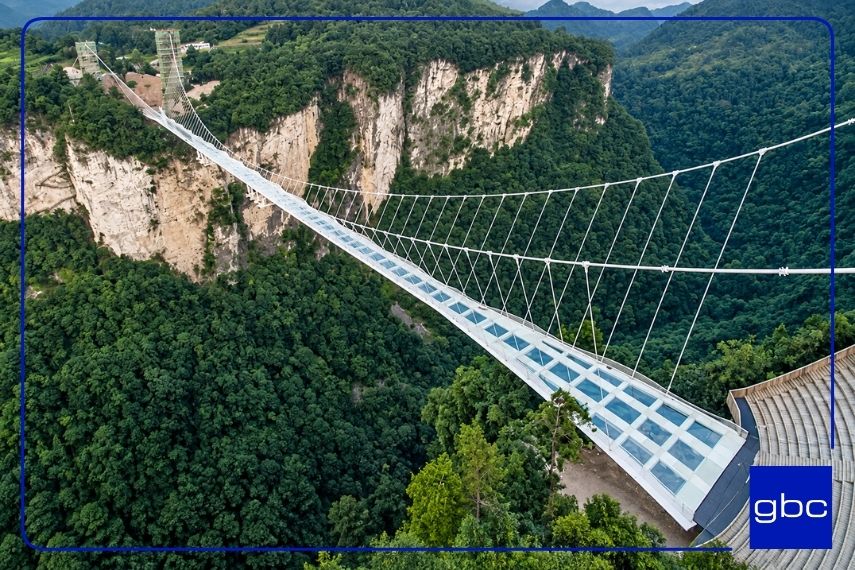
Photo: Zhangjiajie Glass Bridge, China.
3. Trift Bridge, Switzerland: a narrow footbridge 100 m above a mountain lake
The current Trift Bridge is 170 m long and sits about 100 m above Lake Triftsee. An earlier bridge opened in 2004, but its location and exposure to strong winds created problems with stability and access.
The replacement bridge opened in 2009 at a position 30 m higher, where the wider gorge helps reduce wind speed. Engineers also added parabolic stabilizing cables beneath the walkway and a steel frame along the span to control wind-induced movement, creating a safer and more stable crossing.
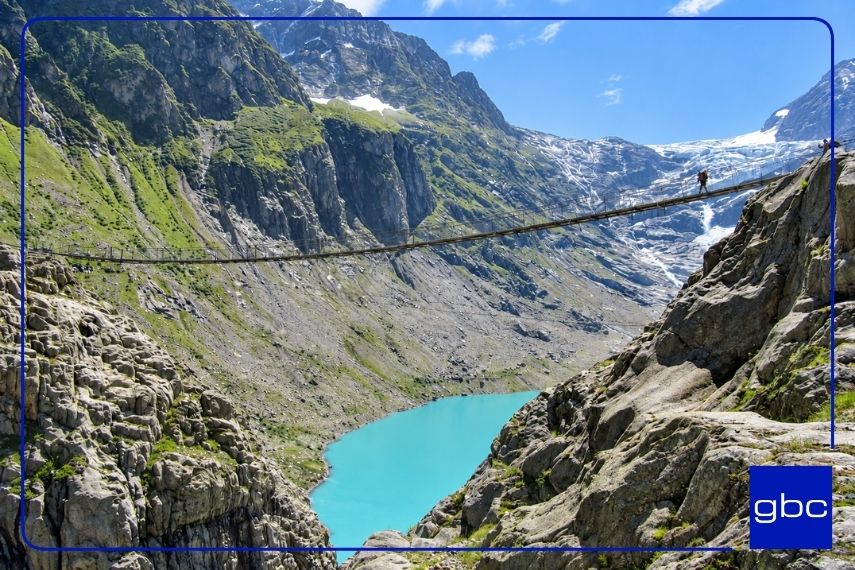
Photo: Trift Bridge, Switzerland.
Read more: Five of the World's Longest Bridges: Engineering Explained
4. Eshima Ohashi Bridge, Japan: a 6.1% gradient that looks almost vertical
From a distance, the Eshima Ohashi Bridge can look almost vertical. In reality[PT2.1], its maximum gradient is 6.1% on the Shimane side and 5.1% on the Tottori side, equal to an angle of only about 3.5°.
The steep approaches respond to site and navigation requirements rather than an attempt to create an extreme road. The bridge rises 44.7 m so ships of up to 5,000 tones can pass underneath. A 250 m main span, supported by a prestressed-concrete rigid-frame structure, allows the bridge to maintain this clearance without using a movable span.
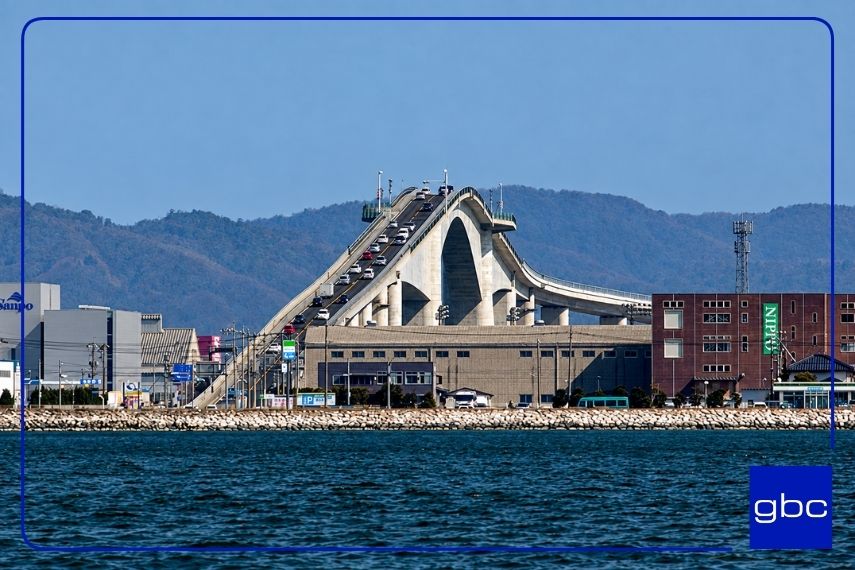
Photo: Eshima Ohashi Bridge, Japan. Source: SHIMANE JAPAN Official Travel & Tourism Guide.
5. Lake Pontchartrain Causeway, USA: 38 km of roadway surrounded by water
The Lake Pontchartrain Causeway stretches almost 24 miles (about 38 km) across Lake Pontchartrain in Louisiana. The long, repetitive view across open water can make the crossing feel much more extreme than its actual height.
For engineers, the unusual length created a different challenge: how to build the same structural system thousands of times efficiently. The original bridge used standard precast components, including piles, pile caps and deck sections, which were produced onshore and transported to the site by barge. This production line approach turned repetition into an advantage and allowed the first 24 miles crossing to be completed in only 14 months.
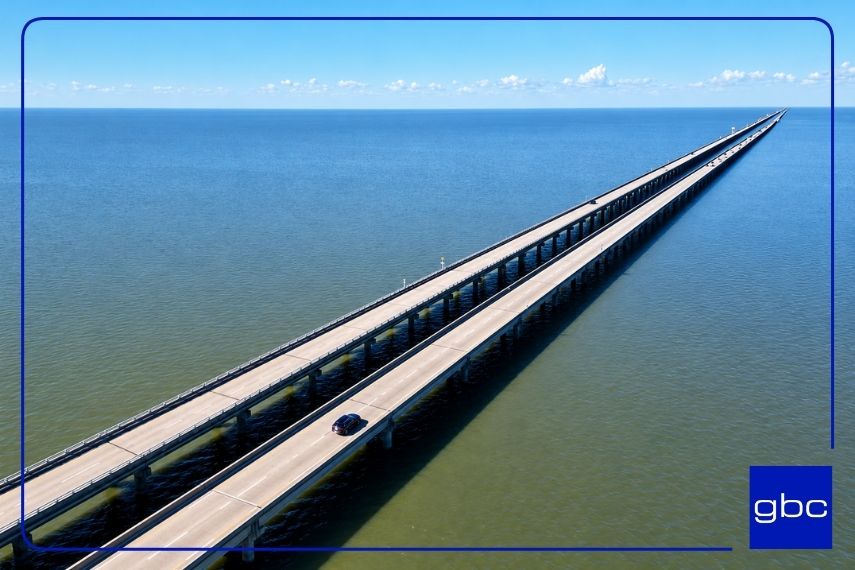
Photo: Lake Pontchartrain Causeway, USA.
6. Hussaini Suspension Bridge, Pakistan: where the danger is not only visual
The Hussaini Suspension Bridge crosses the Hunza River for about 194 m and consists of 472 wooden planks placed with large gaps between them. The openings expose the river below, while the lightweight suspended walkway can move significantly in the wind or when people walk across it.
Unlike the other bridges in this group, the fear here is not only visual. The widely spaced wooden planks expose the river below, and the suspended walkway can sway noticeably in strong winds. Visitors are required to follow safety precautions, including wearing life jackets, and access has been restricted when authorities considered conditions unsafe.
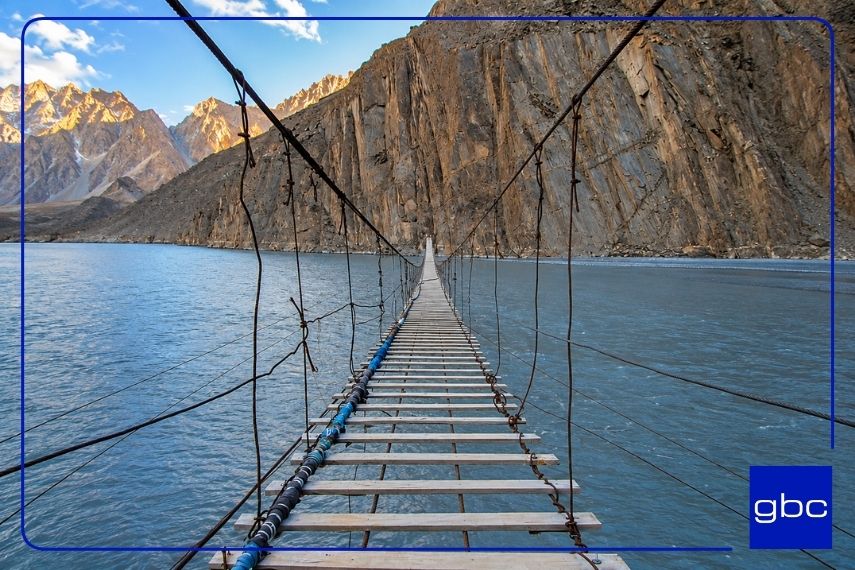
Photo: Hussaini Suspension Bridge, Pakistan.
Read more: When Bridges Fail: 3 Lessons from Structural Failures
4 scariest bridges that feel extreme because of how they move
For these four bridges, wind creates a different engineering problem through movement. Engineers can address it through aerodynamic design, operating restrictions or systems added later to control vibration.
1. Tacoma Narrows Bridge, USA: the collapse that changed wind engineering
The original Tacoma Narrows Bridge collapsed on November 7, 1940, in winds of about 42 mph (67 km/h). Because the deck was narrow and flexible, its shallow solid plate girders made it more vulnerable to aerodynamic forces, causing the bridge to twist with increasing intensity. The failure changed how engineers approached wind effects on long-span bridges. Later research used wind-tunnel testing to study aerodynamic stability, and the 1950 replacement introduced a deeper open stiffening truss, deck openings and hydraulic dampers to better control wind-induced movement.
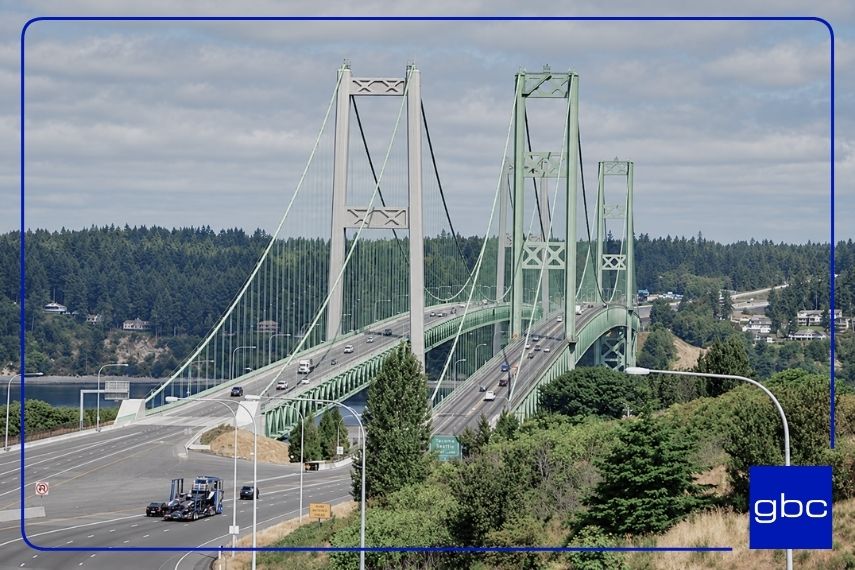
Photo: Tacoma Narrows Bridge, USA.
2. Mackinac Bridge, USA: applying the lessons from Tacoma
The Mackinac Bridge opened in 1957 with a 1,158 m main span and incorporated lessons from earlier suspension-bridge failures. The bridge uses a deep stiffening truss with open structural members instead of a continuous solid surface. Metal grating in the center lanes also lets more air pass through the deck, reducing wind pressure. Engineers also used wind-tunnel testing before construction to assess aerodynamic stability and confirm how the bridge would respond under strong winds.
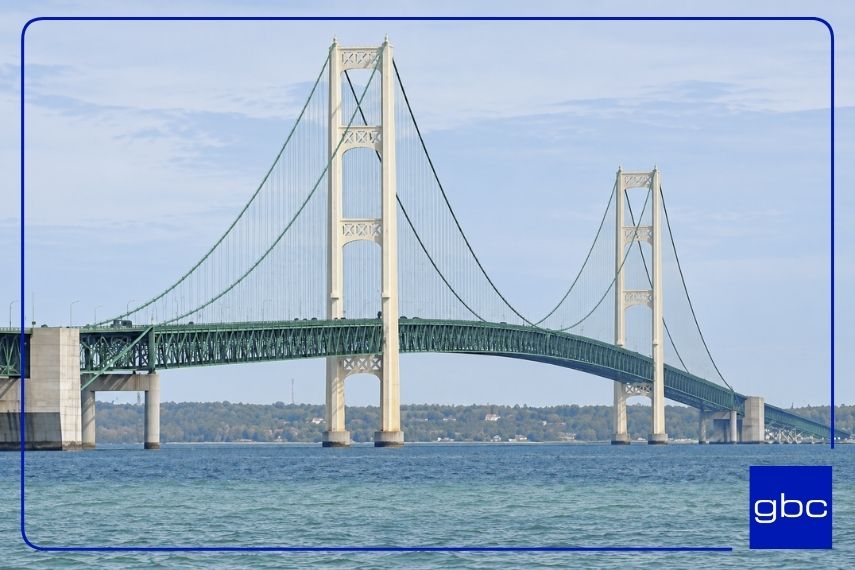
Photo: Mackinac Bridge, USA.
3. Chesapeake Bay Bridge, USA: managing wind risk through operations
The Chesapeake Bay Bridge crosses exposed open water, where strong crosswinds can affect high-profile and lightly loaded vehicles. The Maryland Transportation Authority therefore changes operating conditions as wind speeds increase. Warnings begin around 30 mph (48 km/h), vehicle restrictions are introduced from about 40 mph and broader restrictions apply above 50 mph (80 km/h). Traffic may be stopped completely when sustained winds or persistent gusts exceed 55 mph (89 km/h). This approach manages wind risk by reducing vehicle exposure when conditions become unsafe.
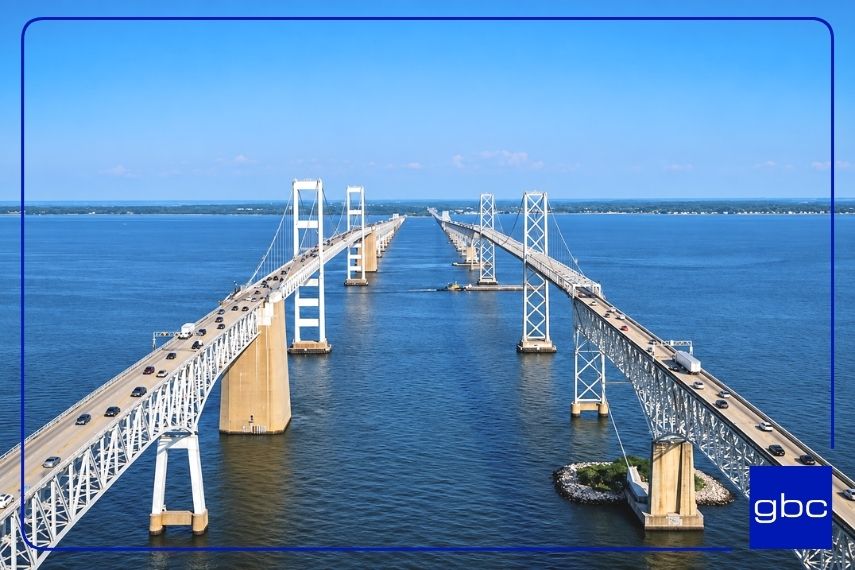
Photo: Chesapeake Bay Bridge, USA.
4. Volgograd Bridge, Russia: controlling vibration with adaptive dampers
The Volgograd Bridge opened in 2009 and was temporarily closed in May 2010 after strong winds produced large vertical oscillations. Inspections found no structural damage, so engineers focused on controlling the bridge's dynamic response rather than replacing the structure.
In 2011, they installed 12 semi-active tuned mass dampers, each using a 5,200 kg moving mass. The system responds to the bridge's vibration and dissipates energy, reducing wind-induced movement without major changes to the existing structure.
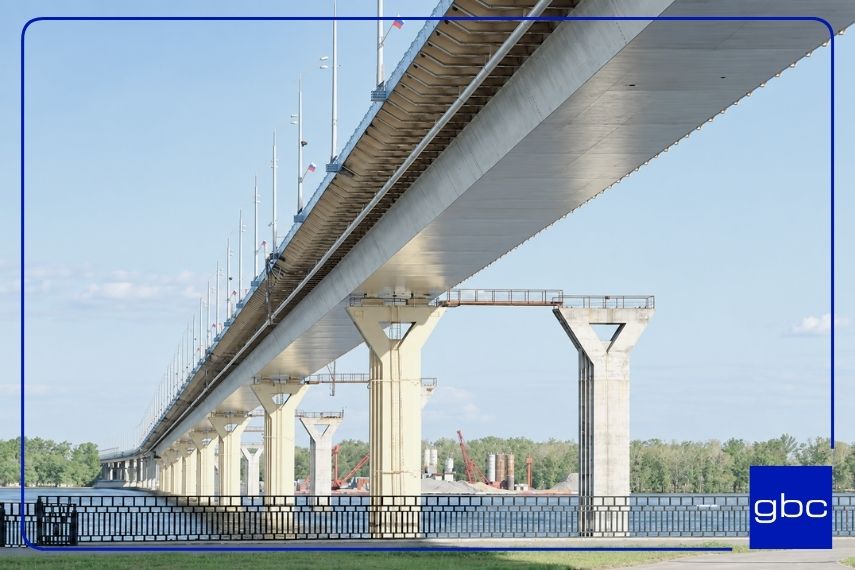
Photo: Volgograd Bridge, Russia
Read more: 5 Signs Your Infrastructure Bridge or Building Needs Inspection
Conclusion
These 10 bridges show that a crossing can feel extreme for very different reasons. The engineering challenge is to understand which condition actually governs the bridge and how that condition should be addressed through design, testing, maintenance or operation.
At gbc engineers, bridge design starts by identifying those governing conditions from geometry, traffic loads, wind, foundations, construction requirements and intended use. Structural analysis then evaluates how the bridge will respond, and BIM helps coordinate its components as one integrated system.
Frequently asked questions
What is the scariest bridge in the world?
There is no official ranking. Some bridges feel extreme because of what people see, others because of how they move in the wind, and people fear different things, so no single bridge can objectively be called the scariest.
Why did the Tacoma Narrows Bridge collapse?
It failed through aeroelastic flutter, a self-exciting twisting motion in moderate wind, which differs from the resonance explanation often taught. Billah and Scanlan corrected this in the American Journal of Physics in 1991.
What is a tuned mass damper on a bridge?
A tuned mass damper is a mass mounted on damped springs that reduces vibration in a structure. The Volgograd Bridge uses semi-active versions with magnetorheological dampers.
Is there help for people afraid of driving over bridges?
At the Mackinac Bridge, staff will drive your vehicle across for a fee plus the toll, 24 hours a day. The Mackinac Bridge Authority runs the Drivers Assistance Program.
Can a bridge move in the wind and still be safe?
Yes. The Mackinac Bridge Authority says the deck at center span could move as much as 35 ft (11 m) east or west in severe wind, because it is designed to be flexible. Engineers control movement through stiffness, shape, operating limits or damping.
|
About us
gbc engineers
is an international engineering consultancy with offices in Germany, Poland, and South East Asia, having delivered 500+ projects worldwide. We provide services in structural engineering, data center design, infrastructure and bridge engineering, BIM & Scan-to-BIM, and construction management. Combining German engineering quality with international expertise, we achieve sustainable, safe, and efficient solutions for our clients.
|