Reviewed by Yoan Guyon, Managing Director at gbc engineers
When people hear about the world's longest bridges, the first question is usually about length. How can a bridge continue for 50, 100 or even 160 kilometers? Yet the more interesting question is what it takes to make a structure that long work.
Over that distance, a bridge may cross soft ground, rivers, roads and cities. The same solution may work for many kilometers, then change when the ground or railway requirements change. For high-speed rail bridges, even small movements matter because the track above must remain smooth and accurate.
The five bridges below are among the world's longest, but length is only the starting point. Each has its own engineering story, shaped by the place it crosses and the problems engineers had to solve.
1. Danyang-Kunshan Grand Bridge: making 164.8 km buildable
The Danyang-Kunshan Grand Bridge is in Jiangsu, China, and runs for about 164.8 kilometers as part of the Beijing-Shanghai High-Speed Railway. Guinness World Records recognizes it as the longest bridge in the world.
What makes it interesting is that it is not one giant span. Much of it is a long viaduct built from repeated concrete elements, and that repetition made a project of this scale practical to build.
However, the route also passes through the low-lying Yangtze River Delta, with soft ground, canals, rivers and lakes. Around Yangcheng Lake, the bridge crosses open water, so the construction approach had to change while the railway alignment remained consistent.
The engineering story is simple: standardization made the overall project possible, but local conditions still decided where the standard solution had to stop. Engineers need to know what can stay the same and what needs to change.
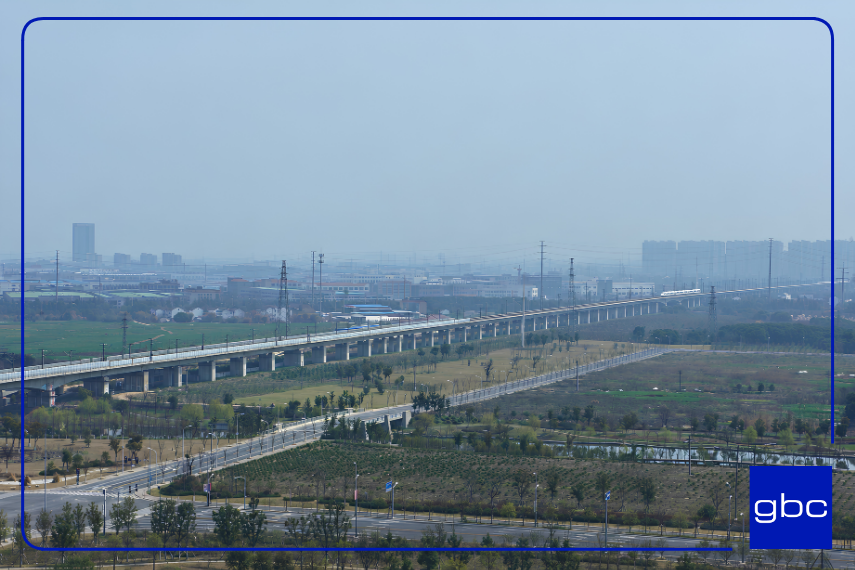
Picture: Danyang-Kunshan Grand Bridge.
Read more: When Bridges Fail: 3 Lessons from Structural Failures
2. Changhua-Kaohsiung Viaduct: designing for earthquakes
The Changhua-Kaohsiung Viaduct in Taiwan is about 157.3 kilometers long and forms a major part of the Taiwan High Speed Rail network.
Its main challenge comes from Taiwan's seismic environment. High-speed trains need stable track, so during an earthquake, keeping the bridge standing is only part of the job. Structural movement also has to remain controlled so that a train can slow down and stop safely.
On one 38-kilometer section, engineers created around 70 structural models to study how the viaduct, foundations and rails would respond together. Some bored piles reached about 60 meters, and the analysis also considered the effect of continuously welded rails between adjacent spans.
This is a clear example of system thinking. The bridge, soil and railway cannot be treated as separate problems when an earthquake affects them at the same time.
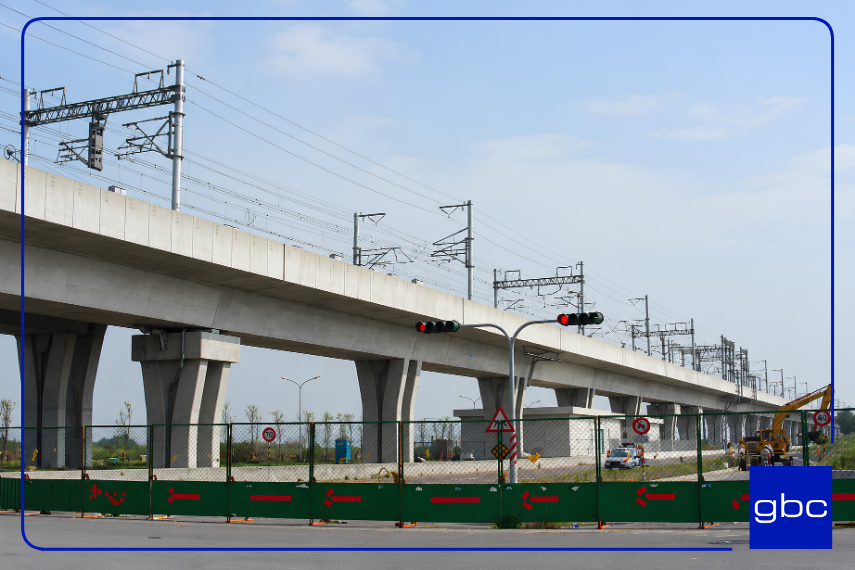
Picture: Changhua-Kaohsiung Viaduct
3. Tianjin Grand Bridge: turning repetition into a construction system
The Tianjin Grand Bridge runs for about 113.7 kilometers between Langfang and Qingxian in northern China. It is another major viaduct on the Beijing-Shanghai High-Speed Railway.
Its engineering story is about turning repetition into an efficient construction process. Much of the viaduct uses 32-meter precast box girders, each weighing roughly 860 tonnes. Repeating that operation across more than 100 kilometers required a carefully planned system.
The girders were produced in dedicated casting areas and transported along sections of the bridge that had already been completed before being placed onto the next piers. In this way, completed sections helped support the construction of the sections ahead.
Tianjin shows why bridge design and construction planning need to work together. A repeatable structural element is valuable only if it can also be produced, transported and installed consistently.
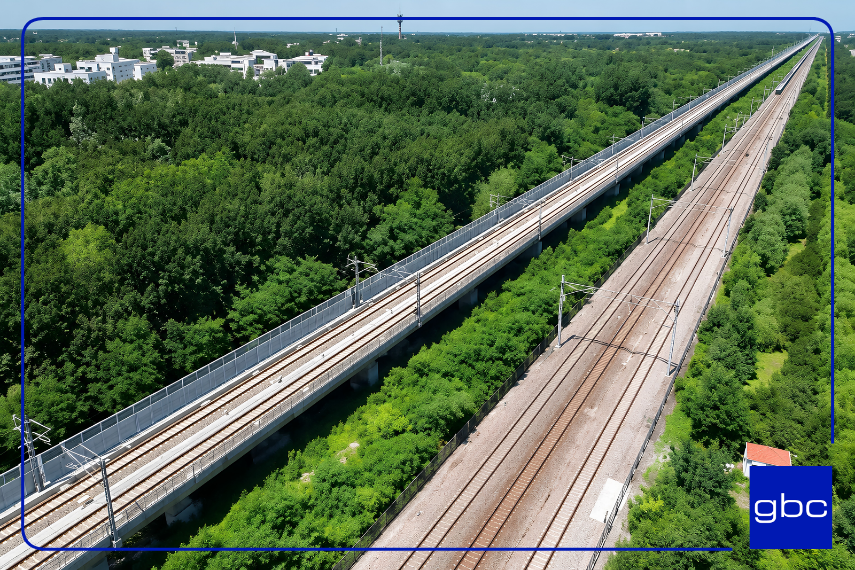
Picture: Tianjin Grand Bridge
Read more: 5 Signs Your Infrastructure Bridge or Building Needs Inspection
4. Cangde Grand Bridge: where the standard solution changes
The Cangde Grand Bridge is about 105.9 kilometers long and is also part of the Beijing-Shanghai High-Speed Railway.
Much of the bridge follows the repeated viaduct system used elsewhere on the route. However, larger crossings could not always use the same span. One important section uses a continuous beam with a 128-meter central span, much longer than the standard spans around it.
That change created a different structural problem. Engineers had to study how the longer bridge section would behave under seismic loading, including the response of its piers, foundations and bearings.
The point is straightforward. Standardization can make a long bridge efficient, but it does not replace engineering judgment. When the route meets a major obstacle, the structure may need to change while still working as part of the same railway.
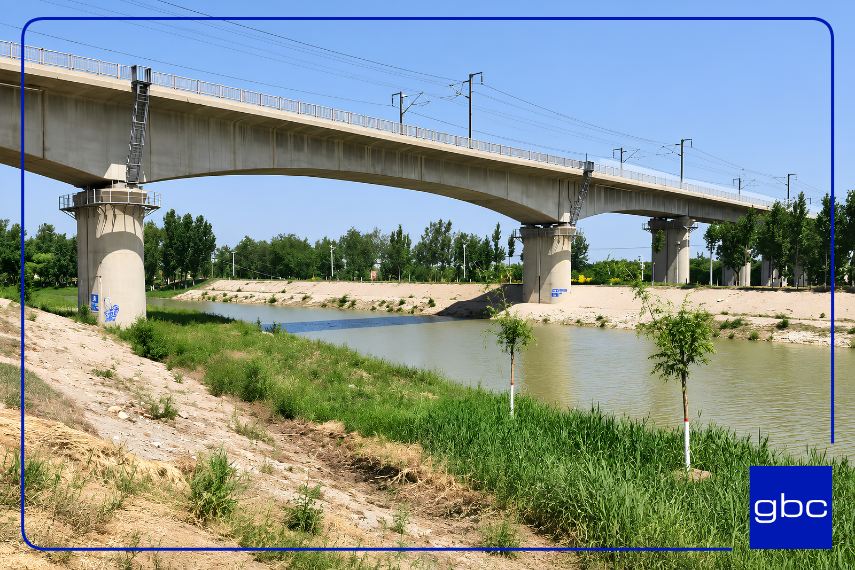
Picture: Cangde Grand Bridge
5. Weinan-Weihe Grand Bridge: building on difficult ground
The Weinan-Weihe Grand Bridge in Shaanxi, China, is about 79.7 kilometers long and forms part of the Zhengzhou-Xi'an High-Speed Railway. It crosses the Wei River twice, together with several smaller rivers, roads and railway lines.
One of its most important engineering stories is under the bridge. Along the Zhengzhou-Xi'an High-Speed Railway, large sections pass through loess, a soil that can lose strength and settle when it becomes wet. For high-speed rail, that matters because the track can tolerate only very small changes in level.
Foundation settlement therefore had to be considered as part of railway performance. Around Weinan North Station, engineers also studied how the bridge and continuously welded railway track interact as temperatures change.
Weinan-Weihe shows how strongly a bridge depends on the ground below it. Even when the structure looks repetitive from above, changing soil conditions can shape the foundation design and affect long-term railway performance.
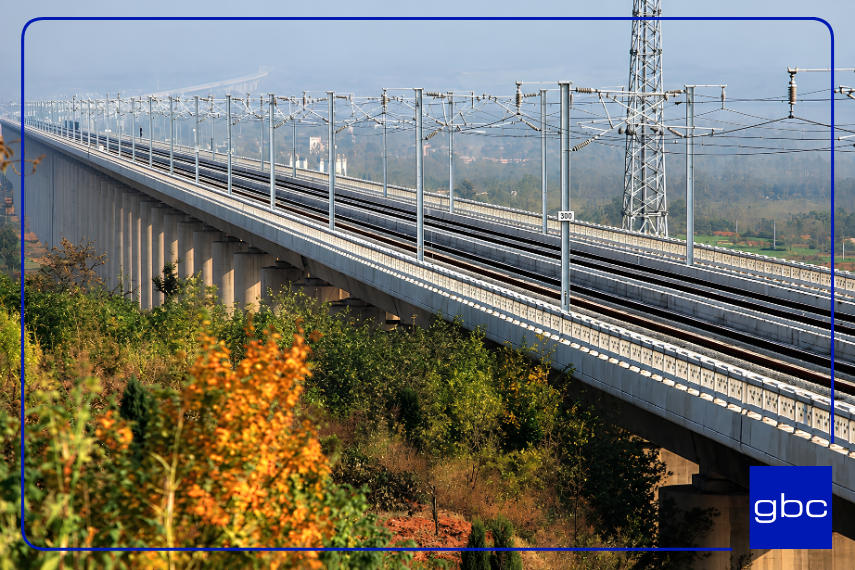
Picture: Weinan-Weihe Grand Bridge
What can we learn from bridges at this scale?
- Repeat proven solutions where they make sense, but adapt them when site conditions change.
- Design the bridge as one connected system, including the structure, foundations and railway above.
- Think about construction from the beginning, including how large components will be produced, transported and installed.
- Understand the ground beneath the structure, because settlement can affect everything above it.
- Pay attention to small decisions, because on a very long bridge, the same detail may be repeated hundreds or thousands of times.
Engineering at scale at gbc engineers
The same connected approach guides bridge engineering at gbc engineers. Across structural design, BIM and digital engineering, our engineers consider structural behavior together with buildability, coordination and construction sequence.
By understanding the site and how a bridge will actually be built, we help clients develop practical, coordinated solutions they can rely on through design and construction.
Read more: Haldensprung Bridge: Innovation in Modern Bridge Design
Frequently asked questions
What are the top 10 longest bridges in the world?
There is no single universally used ranking because sources classify long viaducts, approach structures and bridge-tunnel systems differently. Using a commonly cited list of completed continuous bridges and viaducts, the top entries include:
|
|
|
|
|
|
|
Danyang-Kunshan Grand Bridge
|
|
|
|
|
Changhua-Kaohsiung Viaduct
|
|
|
|
|
|
|
|
|
|
|
|
|
|
|
|
|
|
|
|
Weinan-Weihe Grand Bridge
|
|
|
|
|
|
|
|
|
|
|
|
|
|
|
Metro Manila Skyway System
|
|
|
|
|
Lake Pontchartrain Causeway
|
|
|
What is the longest bridge in the world?
The Danyang-Kunshan Grand Bridge in China is recognized by Guinness World Records as the longest bridge in the world. It is about 164.8 kilometers long and carries the Beijing-Shanghai High-Speed Railway through Jiangsu province.
Why are so many of the world's longest bridges railway viaducts?
Long viaducts help high-speed railway lines maintain a controlled route across roads, rivers, farmland and uneven ground. Repeated spans also reduce the need for a separate crossing at every obstacle along the route.
Why is settlement important for high-speed rail bridges?
High-speed trains depend on consistent track geometry. If one foundation settles more than the next, the track can move out of alignment even when the bridge remains structurally safe. Controlling settlement is therefore important for both the structure and long-term railway operation.
|
About us
gbc engineers
is an international engineering consultancy with offices in Germany, Poland, and South East Asia, having delivered 500+ projects worldwide. We provide services in structural engineering, data center design, infrastructure and bridge engineering, BIM & Scan-to-BIM, and construction management. Combining German engineering quality with international expertise, we achieve sustainable, safe, and efficient solutions for our clients.
|