Composite steel-concrete floors are a high-performance solution for commercial, industrial, and data center buildings where speed, span efficiency, and tight coordination with building services matter. But getting the system right requires more than sizing beams: deck selection affects construction-stage behavior, shear studs control composite action and cost, and deflection must be checked across multiple stages to avoid fit-out problems and disputes.
This guide walks through the engineering logic behind composite floor systems with practical focus on deck, studs, deflection, and construction stages. It is written for developers, building owners, asset and facility managers, client-side project managers, architects, and technical managers. If you need support on steel and concrete structure design and BIM-based coordination, gbc engineers can assist as a structural engineering consultancy Germany-based team with international delivery experience.
Composite steel-concrete floors in steel and concrete structure design
A composite steel-concrete floor typically combines:
- Steel beams (primary and secondary framing)
- Profiled steel deck (permanent formwork and construction-stage spanning)
- A concrete slab cast on the deck
- Shear studs connecting slab to beam so they act compositely
When composite action develops, the steel beam and concrete slab share resistance and stiffness. This often improves strength-to-weight efficiency and serviceability performance compared to non-composite steel floors.
Where composite floors fit best
Composite floors are widely used in:
- Commercial buildings (offices, mixed-use, retail)
- Industrial facilities with long spans and fast programmes
- Data centers, where deflection, vibration, and service coordination are critical
- Retrofit and strengthening scenarios where composite action can improve capacity, subject to existing-condition constraints
Early decisions that reduce risk
Before committing to member sizes, align early on:
- Structural grid, spans, and column positions
- Loading basis including equipment and future fit-out
- Service zones and penetration strategy
- Performance targets for deflection and vibration
- Construction sequencing assumptions that affect temporary conditions
This is where steel and concrete structure design is most “leveraged”: small choices can prevent major redesign later.
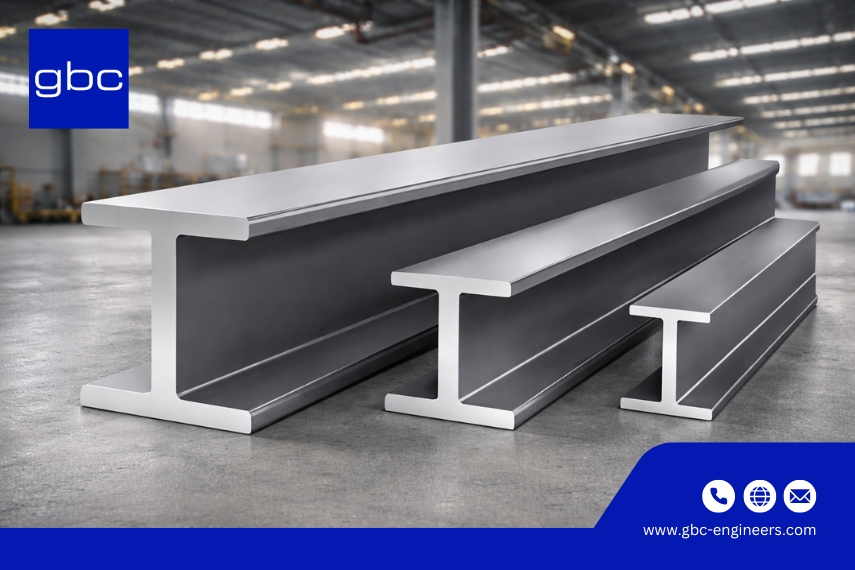
Profiled steel deck and slab build-up: selection, layout, and coordination
The deck is not just formwork. It influences:
- Construction-stage spanning and deflection
- Pour sequencing constraints
- Stud placement constraints due to deck ribs
- Openings and edge detailing
- Coordination with embeds and service routes
Key deck parameters
Selection typically considers:
- Profile depth and rib geometry
- Thickness (gauge) and stiffness
- Span direction relative to secondary beams
- Support spacing and fixing assumptions
- Edge trims, pour stops, and interfaces at façades and cores
Slab build-up
Slab thickness and reinforcement intent are driven by:
- Design loads and robustness needs
- Crack control expectations and durability requirements
- Openings and concentrated load zones
- Interface with fire strategy decisions (coordination level, often with specialists)
Coordination reality
Most composite floor issues come from late changes:
- Added penetrations in dense service corridors
- Moving openings near beam lines
- Clash between studs, deck ribs, and embedded items
A practical approach is to define “opening rules” early: what is allowed without trimming, what requires trimming steel, and where studs must be kept clear.
Shear studs and composite action: design logic, spacing, and detailing
Shear studs transfer longitudinal shear between the steel beam and the concrete slab, enabling composite action and increasing stiffness.
Full vs partial shear connection
Stud quantity is not just a strength question. It is a performance and buildability decision:
- Full connection maximizes composite action but may increase welding time and cost.
- Partial connection can be efficient if strength and serviceability checks still pass.
The right choice depends on span, loads, deflection and vibration targets, deck geometry, and constructability constraints.
Buildable detailing
Stud layout must respect:
- Minimum spacing and edge distances
- Rib effects in profiled deck
- End distances near supports and beam splices
- Keep-clear zones around openings and dense service routes
Common pitfalls
- Late MEP penetrations cutting through stud zones
- Generic “standard spacing” used without serviceability verification
- Insufficient clarity on drawings about stud-free regions
Structural checks that matter: ULS, SLS, vibration, and cracking risk
A competent structural engineer should document both capacity and performance in a way that is understandable to client-side teams.
ULS (strength) checks
Typical checks include:
- Composite bending capacity
- Shear capacity and local web checks where needed
- Bearing and end reactions
- Local detailing near concentrated loads and supports
SLS (serviceability) checks
These often drive user satisfaction and fit-out risk:
- Deflection limits for partitions, façades, and finishes
- Vibration comfort for occupancy and sensitive equipment
- Crack control intent and reinforcement strategy, especially near openings and load concentrations
Design choices that improve performance efficiently
Often, targeted system decisions outperform “more material everywhere”:
- Adjust secondary beam spacing and deck direction
- Optimize beam depths selectively
- Provide local strengthening around cores, plant zones, and large openings
- Lock down an opening strategy early to avoid repeated disruption of the framing
Deflection across construction stages: what to check and what to communicate
Deflection in composite floors changes significantly by construction stage. Treating it as a single final number is a common source of misunderstanding.
Stage 1: Deck-only behavior (pre-pour)
The deck may need to carry construction loads and wet concrete depending on sequencing and whether temporary propping is assumed. Design notes should state:
- Deck spanning assumptions
- Any propping assumptions
- Construction load assumptions
Stage 2: Wet concrete stage (non-composite)
Until concrete gains strength, the system is not fully composite. Steel beams can experience larger deflections under wet concrete loads. This stage is sensitive to:
- Pour sequence and load placement
- Camber assumptions, if used
- Temporary constraints that must be communicated to site teams
Stage 3: Composite stage (post-cure)
After curing, composite action increases stiffness and typically reduces live-load deflection. Long-term deflection considerations may include sustained loads and concrete time-dependent effects.
What should be explicit in documentation
To reduce disputes, ensure the design package clearly states:
- Stage-by-stage assumptions
- Whether temporary props are required or not
- Camber intent and basis
- Which loads are treated as sustained (partitions, ceilings, services)
Construction stages and temporary stability: design interface notes, not contractor scope
Composite floors go through temporary conditions that affect stability and performance. Design teams can support by clarifying assumptions and interfaces, while the contractor remains responsible for temporary works and site execution.
Typical sequence
Steel erection, deck installation, stud installation, pouring and curing, then transition into composite behavior.
Temporary stability considerations (design interface)
Design documentation may include:
- Assumed diaphragm behavior before concrete curing
- Interface notes for erection stability and contractor temporary bracing concept
- Constraints that, if changed, require engineering review
Quality control interface (engineering perspective)
Instead of “inspection,” a consultant-led approach focuses on engineering clarity:
- Review of stud welding specifications and required inspection regimes
- Verification of deck fixing assumptions used in design
- High-level review of concrete placement and curing assumptions that influence structural behavior
Risk-control checklist for client-side teams
- Ensure construction load limits and sequencing constraints are shared
- Control late penetrations via change management
- Track RFIs and confirm assumption changes are assessed structurally
Coordination with architects and MEP: openings, fire interface, and performance constraints
Composite floors are one of the most coordination-intensive parts of a building.
Openings strategy
Successful projects define:
- Which penetrations are “standard” without trimming
- When trimming beams are needed
- Stud-free zones around openings
- Edge trimming approach and re-entrant corner detailing intent
Fire and acoustic interface
Fire and acoustic performance are typically led by specialists. Structural design must coordinate interfaces that affect framing, build-up, and openings.
Fire and acoustic performance are coordinated at interface level in collaboration with specialist consultants and project stakeholders.
Conclusion: turning composite floor complexity into predictable delivery
Composite steel-concrete floors can deliver major programme and performance benefits, but only when deck selection, stud strategy, serviceability checks, and construction-stage assumptions are aligned and clearly documented. For developer-side and owner-side teams, the biggest wins often come from early decisions: grid rationalization, opening rules, service corridor planning, and stage-based deflection criteria that match the realities of construction.
If you are planning a project that needs steel and concrete structure design with reliable BIM-based coordination and performance-led serviceability checks, gbc engineers can support feasibility through detailed design and construction-stage engineering interface, as a structural engineering consultancy Germany-based team with international delivery experience.
|
About us
gbc engineers
is an international engineering consultancy with offices in Germany, Poland, and South East Asia, having delivered 500+ projects worldwide. We provide services in structural engineering, data center design, infrastructure and bridge engineering, BIM & Scan-to-BIM, and construction management. Combining German engineering quality with international expertise, we achieve sustainable, safe, and efficient solutions for our clients.
|